Episode 27 · · 46:31
The Next AI Battle Isn’t Technology — It’s Trust
About this episode
Four-time founder Guy Mounier thinks trust becomes the scarce currency of the next decade. He discusses how AI is changing the way organizations make decisions, what it takes for people to rely on those systems, and the thinking behind his Trust Era Project.
- Governance, Law & Trust
- Founders & Startups
Guest
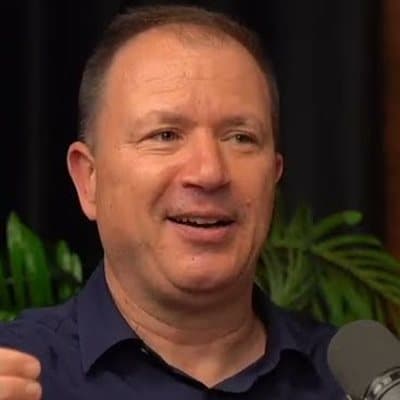
CEO, Boon AI
Key takeaways
- Guy Mounier says his second company, a KYC fintech, failed because banks had no incentive to fix slow onboarding: clients who are hard to onboard rarely leave. He wishes he had cut his losses sooner.
- Mounier recounts a 12-month financing for his AI sales-agent company vanishing when the fund froze new investments. An investor’s thesis that seller agents and buyer agents will handle B2B transactions pointed him toward Boon.
- He argues B2B buying has a trust problem, not a demand problem: buyers carry too much regret risk. AI agents, he says, can broker trust by verifying customer references and past implementations before anyone meets.
- Boon’s agents would ask every buying committee member about regrets six months after a purchase. Mounier sees that kind of undocumented knowledge, from reference calls and hallway conversations, as the data needed to unlock better AI.
- Mounier’s diagnosis is that people distrust AI because they distrust the companies and governments behind it. He calls AI a grounding technology that could help build consensus and give the silent majority a voice.
- He warns that small companies that relied on Google search and paid ads to be found now need to show up in AI answers, by publishing detailed profiles of what they do.
Transcript
Transcript generated automatically from the episode audio and lightly cleaned up (filler words removed, misheard names corrected where clear). Speaker labels were added afterward and may contain errors.
Rob May: Hi everyone. I'm Rob May. I'm the co-founder and CEO of Neurometric. And today on the AI in NYC show, we have a very special episode for a new format that we're trying where we are going to feature interviews with profiles that are a little more in-depth on specific executives that are doing really interesting things in AI tech. So today I'd like to welcome my guest Guy Mounier who's the co-founder and CEO of Boon AI.
Guy Mounier: Yes, thank you Rob. Thank you for having me.
Rob May: So, we have a bunch of things we want to talk about. We're going to talk about a little bit about your history. We're going to talk about Boon and Weiss the opportunity. We're going to talk about investing because we've both been operator investors. And we're going to talk about the trust in AI project. So, lots of interesting topics to cover. But let's start with so you grew up in France.
Guy Mounier: Yes.
Rob May: And you know one of the I think one of the first questions people are going to ask is like you know tell us a little bit about your background and we have this perception of you know Europe doesn't produce you know good sort of entrepreneurship vibes and all that kind of stuff like what was your experience like and sort of how did you go from like were there things that shaped you early in your life that you think made you into an entrepreneur or like and how did you really get started?
Guy Mounier: Yeah, I mean you know as as a child without you know any cell phones around or anything like that you end up exploring a lot fixing bicycles, helping other kids. So always felt of service and helping you know bring people together and solving problems you know fixing fixing things. And just in general, I think the this whole kind of upbringing of being kind of self-sufficient and always curious about various things. I played music, you know, I love to play soccer and tennis and all sorts of academic topics. And so all all these things together created a pretty rich context which I think is quite key if you want to think out of the box, right? So some of the folks in AI today talk about a divergent thinking, right? Like trying to be creative about, you know, bringing new solutions because I think AI is not just about efficiency improvement. It really is about transformation, doing things differently and better.
Rob May: Now when when you went to college, you actually studied something technical, right? Mathematics or engineering or something like that?
Guy Mounier: Yeah, both actually.
Rob May: Yeah. And did you have any idea at that point in time that you were going to take more of the CEO path because a lot of a lot of technical people like they don't like the CEO is a very people intensive job and you know you have to do a lot of coaching you have to do a lot of hiring you have to spend a lot of time getting the team aligned on what you're going to do and you know coming out of an engineering background did you did you ever like did you realize early on that you still had the people skills did you lean towards the people skills and what was that experience erience like
Guy Mounier: I did I mean it was gradual. I would describe myself as someone who had quite introvert someone initially you know unsure of himself you know not a ton of self-confidence and you know unsure where I was going. But with time what I noticed is that I had very strong empathy. I could figure out why why someone was moving in a chair and a bit uncomfortable and what they were trying to say without saying it. And so I got drawn into influencing decisions because I had some strong ideas about the way things should be. I always like to be in movement action. So I remember not liking doing research. I actually dropped out of a PhD program in mathematics. Yeah. So because it was just too conceptual, too abstract and not enough action and so gradually I started to evolve towards entrepreneurship even sales. I spent almost 15 years in enterprise sales and I remember loving the action and kind of I love being kind of that person with the gravitas and the deal making aspect of things. That was something that I found really exciting.
Rob May: Yeah. And now, you know, you mentioned earlier that you when you were growing up, you did a lot of stuff with other kids, maybe were sometimes pulled into being like the deacto leader of your group or things like that. And so, did you did you did you feel that way as you got older? Like even when you were more introverted engineer, did you still feel maybe like some of those leadership qualities? Did you still have a similar you know, vibe in college as maybe you did when you were you know, growing up in France?
Guy Mounier: I did. So, you know, in spite of all the insecurities you may have, right, as a teenager and young adult, I always felt that I mean, I had kind of a clear direction of what I was trying to do, I could kind of picture it. And I also noticed that when I would speak, you know, people would listen. They like the expertise. They like the vision. They s it sounded interesting, exciting, sometimes a little over the top. But enough to create enthusiasm around a project. That I always had from a very young age. Yes.
Rob May: Yeah. And so what made you decide to go from you know enterprise sales into starting a company?
Guy Mounier: So really it started so at first I was a business development engineer. So kind of a technical sales role. Yeah. And really the first company got created almost by accident. You know talking about you know coming from France and I came to the US at a very young age. Actually came to study started to work in the business development role and I remember a co-founder one of the three ultimately but the co-founder of my company approached me and at the time it wasn't a company but he said hey French man are you going to continue and live your comfortable life you know drink wine and eat cheese or are you gonna change the world with me that literally what he told me because we had a really cool project that we worked on inside the company and we actually ended up spinning it off it became the company known as BA Insight which ultimately got acquired.
Rob May: Interesting. And how did you feel like that experience went like I one of the things that I went through? So I was 31 the first time that I became a CEO for the first time. And I thought it was hard for me because I was young. But the thing that I've learned with a lot of investing and everything else is it's actually really hard for everybody the first time I think because it's such a different job at every company and people do it in different ways. And so there's like you can get a coach and that can help but there's like no playbook and it's just it's harder than most people think. I remember when when my first company got acquired and I went into the acquiring company and I was still maybe one of the top four or five executives there but it was like and I still worked a lot but like it was an order of magnitude less stress than than sort of having your neck on the line for everything at the end of the day.
So like what was that experience like for you? Like do you did you did you struggle to accept it and grow into it or did you feel like it was actually like you just it was natural given some of your background or what what was it like for you to be a CEO for the first time?
Guy Mounier: Somewhat somewhat similar to what you described. But I mean I was actually 30 in my case when I became you know that first time CEO. We venture backing the average age on the B2B software side was around 42. I remember showing up at these, you know, gatherings, you know, that investors put together and I was by far the youngest. U so it was a little intimidating and yes, there was a lot of moments where I said, you know, I would call it the imposter syndrome like am I the right person you have to be running this company like should I be thinking about hiring a professional CEO etc. But I had some good mentors on the board and it's almost by accident but you get you know some people who take an interest in you. Yeah. And will coach you know outside the board the boardroom and you know because it's all also a very lonely job like you don't want to sometimes show too much stress or panic right when when things don't go part of your job is attenuate the highs and lows.
You know the company's going like this and you want to make it more go like this to the people internally right and not have them absolutely I mean otherwise it's you know they panic and they run for the hill so you have to stay steady but it has over time been one of my core qualities like steadiness in a storm and I've gone through many roller coaster rides but I would say like being able to think clearly through a deep crisis has been things that have you know made a huge difference.
Rob May: Do you think that relates back to like sort of your the way you grew up or you know a house with a lot of siblings might maybe could have been chaotic or more like an engineering mindset or where do you think that came from?
Guy Mounier: I wish I knew because be nice to give it to other people but it's hard. Yeah. Yeah. Yeah. And I and I'm trying to think of what kind of experiences, you know, I had that shaped me for sure there was always a sense I mean I grew up in a big family you know four kids I was the oldest and you know parents would ask their kids to help. I mean I do everything I go shopping I do this I fix that you know I had a lot of responsibilities very young age. In fact I had myself after that you know four kids myself at a very very young age. So that strong sense of responsibility but it doesn't really prepare you fairly comfortable life and you know call it middle class in France or nothing nothing too fancy of any of any sort but it it no particular crisis very peaceful you know childhood
but the level of resilience I was able to exhibit in very very tough situations of all sorts I surprised myself frankly by you know like you almost feel at times like [clears throat] you're in an incredibly desperate situation yet the next day you figure out a way out like running out of cash how I'm going to run payroll how we're going to fix this customer problem that you know if we lose this customer you know this is going to be major issue for the for the company and I've learned this lesson of you only die once in startups every u every other times is a close call. Yeah. Right. And when you know that then you know even in a crisis moment you say you know what we've done this like a hundred times it's going to be okay.
Rob May: Yeah. Yeah. No that that's very very true. And I you know, it sounds like you and I have had a little bit similar paths in how we built our companies because you it looks like your your first company was Microsoft's number one strategic partner, had a good acquisition. And I want to talk a little bit about your second company now, which it sounds like struggled, the product lived on, but investors maybe didn't have a great outcome. And I sort of had the same path, right? I really great outcome on my first company and you know going into company number two like we had multiple term sheets and everybody wanted to be involved and like I thought it would be easier and it was just this hard and it it it taught me a lot about you know just market timing and how random factors can affect some of this and every company's different. And so what what was that experience like for you and
Guy Mounier: yeah I think you know it's so to your point I mean you learn a lot and in fact you learn more from your failures and some of the crisis and difficulties you have to go through than you learn from successes in my view and so what I learned I mean it the company was a fintech we're focused on KYC know your customer in banking and what we learned very quickly is essentially in a nutshell that between compliance right who said no you're not going to touch our customer data it's going to take two years you know to give you access to the data so everything in the bank was organized to basically make things not happen
but really the nail in the coffin was what you learned is the banks like the fact that it was hard to on board a client because once you were on boarded you would not go anywhere as a corporate client [laughter] not corporate consumer. Yeah, it was very difficult to switch a very painful process. So, there was actually no incentive to fix that problem. So, Anderson has a beautiful say on this. They call it a zombie zombie ideas. Like you wonder how come nobody, you know, solved that problem. Well, it turns a lot of people did and they died, right? Just trying sometimes the incentives aren't there and just the incentives weren't there. And so it it's what I learned. The tech was was very good. In fact, the tech got acquired. The R&D team which were 30 plus engineers, you know, got acquired. So, they they'll do they're doing very well, but apply to very different fields.
Rob May: Yeah. And you and I touched on this briefly before the show about, you know, having companies that didn't turn out as well as we hoped. Do you think the entrepreneurial community doesn't talk about it enough? And, you know, we always talk about the unicorns and we're celebrating, you know, how great everything is and I think sometimes entrepreneurs feel really bad when their companies fail and they understand like that's actually kind of like the normal outcome. And you know, you've seen this as an investor or you've lived it as an entrepreneur like, what's your advice to somebody that's going through that, that's spent four or five years of their life building something to be like, h, this isn't going to be what I hoped.
Guy Mounier: Actually, a very, very interesting question. I've seen a little bit of a shift. There's really a deep desire for people to have, you know, a bit more authenticity for sure and vulnerability in what they describe. You know, we all mature adults. We understand how hard it is to build a company. So, yes, I mean, once in a while you have, you know, the company, you know, the overnight success, right? And everything went right and, you know, they they rewrite a little bit of the history and they had an amazing ride, but the reality we all know is a lot more of a roller coaster ride. So one I think you see more of these authentic stories and people you know gravitate to those and I think for some of us who are investing in companies it's you know I know you are I am as well. We often do so because we're passionate about helping you know younger entrepreneurs succeed.
Also we like coaching certainly true for me. I like to [clears throat] to coach and so it's important to help u in fact it's an investment criteria for me to look for entrepreneurs who have both that kind of grit and resilience but at the same time are coachable and agile because you really really need to you know it like micro pivot on a on a regular basis and it's important you know for people to realize you will need to pivot but you may hit a roadblock that happened to me that that fintech where you're just fighting the wrong war. Like it's yeah, it's the wrong battle. It's not going anywhere. And you have to learn to say, you know what, I've learned a lot from this experience. I'm going to move on to my next project. [clears throat] Now, I have the scars to prove it. I have sometimes not done that early enough, like recognizing I was hitting a wall because it's your baby and you don't want to give up.
And am I am I giving up too early, right? Is the question. It's hard to know. Or you know is there is there still some rope like where I can figure it out but in retrospect you do realize you know what this wasn't product market fit it didn't feel like it and it wasn't and the new project turns out to be so much more exciting so much more interesting so much more potential you almost wonder hey why didn't I cut my losses sooner that that has been my experience is my first startup and when I look back. I recognize the learnings, but I also recognize I should have probably pivoted either earlier or cut off the losses earlier.
Rob May: Yeah. I mean, there's a saying in investing, right, that you don't have to make it back the way you lost it, right? So, you can always lose some money, but go make new investments and make it back, but when it comes to your time, you can't get it back.
Guy Mounier: Exactly. It's really important.
Rob May: So, let's talk about your So, your third company, which sort of, I guess, led to your fourth company, had this really interesting near-death moment that was like not really your fault. So I want to hear a little bit about the story because th and those are some of the most challenging ones.
Guy Mounier: Yeah, it it was a very painful experience because we you know I had worked like for 12 months on a pretty significant financing for my third company. So my third company isn't essentially an AI sales agent, right? That detects buying intent and figures out what the right message to send to people based on that purchase behavior. And you know the we had a pretty significant you know financing that we had worked on you know for a while to try and make happen and comes the summer the financing disappears. I mean essentially the fund goes through some sort of bankruptcy proceeding they have to restructure freeze all new investments and basically puts us in a complete distress situation. And I had made a lot of promises to a lot of people including people who lent money on a short-term basis to help keep the company afloat. And here I am, you know, not not being able to close the round.
So that was you know, I went through my small depression, [laughter] went back to France, thought I would not come back, went to see my parents, you know, and I was like, you know what, there has to be a way to turn this around. I mean the what what we're up to is really significant. AI is transforming the buyer seller experience in a way that is very profound. And as I started to talk about people about how ways to unblock in those situations by the way you learn who your friends are very quickly for sure and who your true believers are whether it's employees or adviserss and through that process I connected with a former co-founder a co-founder who helped me build my whole engineering team in the first company who had built a buyer agent and then we meet an investor pretty well-known investor I'll keep it confidential for now that says, "Hey guys, we think aentic commerce for B2B is the future that you need to have a seller agent talking to a buyer agent and handle 90% of the transaction for you, right?
And humans take care of the consensus building and closing the deal." And sure enough, you know, they start putting some money in this and we figure out a way forward. But I have to say that that period of time between September and December was probably [clears throat] the toughest in my life.
Rob May: Well, one of the things that you mentioned given that you've done some early stage investing, you've built early stage companies is that the market office often confuses early with wrong. So how do you both as an investor and an entrepreneur like how do you hold on to conviction? How do you how do you evaluate like am I crazy or am I early and what's your thought process?
Guy Mounier: So you have to look at core trends or or things that are that are happening. Yeah timing the market is a very very difficult thing to do as an entrepreneur. But you know I'll give you the example of this AI sales agent that we're building. You know, we're building an AI sales agent before ChatGPT existed. So when we made statements like, well, this AI sales agent will be able to do calls and we'll be able to send personalized messages for every single prospect they speak to based on a very rich context. You know, literally investors wanted to throw us out of the window like say no, an AI sales agent will never replace a human in those functions. And then next thing you know ChatGPT comes out and now all of a sudden it becomes you know feasible in people's head so that that contrarian approach right u being contrarian but right right is that very difficult balance because of course you can sometimes be and often be contrarian and wrong right delusional
but it it's about reading kind of the major trends like I also like to give an example of AI right like we all the talk about how AI will make you know things more efficient. So what is some of the first wave you see of AI applied in sales right the field I know spamming at scale. So now you see the AI spam you at scale use sometimes the wrong pose to start making a point that completely comes off right total lack of empathy [clears throat] like you know some people went through a difficult time you know they post on LinkedIn and the AI uses it you know to personalize the message right so that's it's all the things that you can do wrong right with AI but then there are the things you can do right So transformation. So how do you rethink a process? Right? Right now you have a buyer seller relationship that's broken.
You don't have a demand issue. People need things to improve their business. It's they're in the business of producing ROI in and buying solutions. The problem is they don't trust. They have too much regret risk. They've been promised all sorts of things that don't work out. How do you restore trust? I actually think AI can be a broker for trust because AI brings a context around both people before they meet. It can it can verify for you customer references. It can verify right what partner implementations how they went. And so you come to a meeting with two AI assistants that have all the background work to create a trust environment, a high confidence environment. And we all know that in a high confidence environment, collaboration and good outcomes happen a lot faster.
Rob May: And what's interesting to me about it is you're you're doing it sounds like you're doing the work that it would take humans quite some time to do. And it's work that is not in anybody's job title. So it's hard to do, right? People buy things but you know you're the VP of engineering you buy engineering software you buy Jira or whatever right or you're you're the head of IT so there are people who have to buy these things but it's typically not their primary job they have to run them they have to do other things so it's always hard to find time to go evaluate tools and I think it's one of the biggest things that people who sell software and similar products struggle with which is like my buyer's interested they have a need they have a budget freeing up time to evaluate the tool and run the process and see which one they should buy is hard. And it sounds like that's is that the piece that you're attacking or
Guy Mounier: it it is it is and it's exactly it's exactly what you describe. It's not their full-time job and on top of that a lot of the organization behind you can be quite dysfunctional with with stakeholders with different agendas etc. So your job is also to align the buying committee which may have like 12 stakeholders involved. Some of them have a veto right like compliance and security right they can kill a project. So it's a job of like building a consensus and to your point a lot of manual effort of vetting the solution you know doing a pilot. What if you could rely you know on on other people's bio proof right evidence that this is working through a network of agents that that brings that proof to you nearly instantly and the most of the data to do this it comes from publicly available information. It comes from the companies themselves.
Rob May: Like how much work is there as a as a buyer to go set things up and tell you my preferences or do you do you scan that in from certain types of information?
Guy Mounier: Well, there is of course I mean a lot of the vendor research nowadays and actually starts in an AI assistant like cloud or ChatGPT. Yeah, of course. And those those are acting as trusted advisors, a lot of public information. But really to make a decision you're not going to regret you actually need a lot of proprietary information, private data. This is what you know it's just like in investing. It's what's in people's heads. It's reference checks. It's, you know, how did that implementation go? Is this a good fit for my use case? Right? Maybe it was a good fit for that use case, but may not mine, right? There's a lot of complexity in B2B. And so figuring that out requires a private network that allows you to access people that you trust, that have the right reputation to give you feedback that you can you can rely on to make that buying decision.
Rob May: You know, you're you're you're hitting on something here, too, which is people buy the wrong thing, lots of times sometimes because when you're going into a new software category that you haven't purchased in before, you don't ask the right questions or maybe, you know, you pull a list online of the questions you should ask to buy certain types of software and they're not always directly applicable to you. And other times people just get sold to, right? Somebody who's like not really comfortable saying no is put in charge of the process and some salesperson just pushes them to buy the thing even though it's not the right situation for them. So do you think services like what you're building can not only make like the like in some sense they may bring like liquidity to the market of buying and selling software by making it easier but like do you think we can actually just get better outcomes across the industry of people getting matched better with the right tools?
Guy Mounier: Yes. I mean that's ultimately the goal right and that's what I meant by efficiency versus transformation. Efficiency is sure you'll have a bunch of agents that can do a little bit of the grunt work. It's like prospecting, right? In the world of sales, right? As a buyer, your full-time job is not doing procurement, procuring and software. So, if software can help you, these agents, we do doing all the vetting all the sourcing for you and you take care of the decision- making at the end with a bank committee that has been fully debriefed, right? That will be a lot more efficient. But ultimately the goal is to minimize your regret risk. Yeah. Right. As much as possible. And for that to your point, you can only learn from others [clears throat] making the decisions and potentially mistakes. So one of the beauty of an approach where you have a set of agents that remember how things went not just you know which buying decision was made but six months later hey buying committee every member of the buying committee any regrets on the purchase of this solution right this allows you to detect patterns patterns about the questions you should have asked patterns about which vendors get selected for your use case, right?
And how successful you're likely to be. I often equate, you know, buying to investing because really you're not spending money in a company. You're investing it to get an ROI. And if you don't, the cost is just like any other investment. It's the opportunity cost. You've you've missed not just the spend, but all the upside you're looking for. And for a large enterprise that that can represents hundreds of millions, billions of dollars.
Rob May: Do you think the kind of learning that your agents are doing in these workflows are the key to sort of unlocking the next level of AI? Because we get a lot of complaints where people are like, well, you know, the certain tasks they're just not that good at Whoa. [laughter] What is going on out there? Is that the mix that Yeah. Do you think you can pull that out?
Producer: That's I can I can pull that out. That's a deep based thing.
Rob May: But I, you know, we get a lot of we get a lot of feedback that sometimes like these agents just aren't good enough or or whatever. And part of it is, you mentioned this earlier, like the knowledge in people's heads. The agents still don't have access to the stuff that's not written down anywhere or the, you know, the fact that you and I might have a hallway conversation and decide on something and that never gets documented. And so do you think this first wave of agents building this and doing the things like like you just mentioned like going back to the buying committee and being like hey how h happy were you with the decision how are we learning do you think those are the data sets that we need to unlock the next level of AI
Guy Mounier: oh absolutely and in fact if you look at so it's a very good point I mean if you look at the boon network that we're setting up this private network I'm setting up your agent's job is to follow you to understand how you're making decisions so understand your relationships understand who can help in your network in making making the right decision whether it's investing or buying a solution but also attend the call that you're having with that customer reference. Obviously, it's very sensitive data. You will anonymize you know the information etc. But the lessons learned are in that meeting recording, right? And so until you have that that business context captured somewhere, you cannot unlock the potential we've been discussing to transform the buyer seller experience. But I do think it's possible. It's in these it it's all in these like ad hoc meetings that you're having you know the of course the discussion at the you know the coffee shop say hey what do you think of the vendor no you should really not go you know that knowledge needs to be spread right and so that people end up picking the right vendor the benefit vendor for their use case.
Rob May: Yeah that's a that's a great point. So, let's let's raise that up a level outside of sales and let's talk about what that means for the economy, for society, and everything else. We have a we have a similar problem, which is trust is at an all-time low. Some people would say AI is making it worse. Some people would say there's a chance for AI to make it better. You know, you're sort of building a company around trust in commerce. Like how do you think about trust and AI in this broader societal sense and the things that are going on there?
Guy Mounier: So, so it's interesting you know my diagnosis of you know trust in AI first of all is that the reason why people don't trust AI is because they don't trust the institutions behind AI whether it's the company or the government to do the right thing with this very powerful technology right so they start wondering is the AI going to be owned by a handful of few right is all the wealth creation going to be held by a handful few or will there be a transformation of the economy right so that that's where the mistrust is because if you think about it right an AI that can you know help you do work robots that can help you with domestic tasks right like who doesn't want that but if you can't afford it [laughter] and you completely cut out of that then of course that's a scary situation
so it's about bu rebuilding trust in our institutions whether it's government and companies and I think AI has the power to create that kind of transformation. So what are we seeing in early studies? So now I'm talking directionally. What we're seeing is AI is a great coach. If there's one application that is amazing about AI, it actually helps you get grounded. Like some of the early studies, right? I mean look at what the internet is, right? Social media is no longer social. You know, division, you know, crazy things here and there being said. What does AI do? Say well yeah no you are not thinking right about this right very politely right AI is always very polite very nice but it will say no this is this is you know what's happening and these are the options you need to look at etc so very grounding technology at a personal level at a institution level society level it has the power just like I described in commerce it has the power to help build consensus and there's a lot of studies is once again around that a lot of complex issues.
When you truly ask people what they think and when they start voting for certain issues and things, there's a lot more consensus than disagreement. And so if AI can can can help create community of like-minded people to resolve specific problems I think it asks a wonderful trust broker at a [clears throat] bigger level than just you know ju just commerce for example.
Rob May: Yeah. Yeah. I know it's very true. Right. The existing media sort of portrays you know every person on the left is a like far off socialist and every person on the right is like a hateful racist whatever. And like the truth is most people on the left and right are actually much closer to the center.
Guy Mounier: Correct. And they don't have a and they no longer have a voice. I think AI can be is a very grounding technology. It can be at the center of that and give this the silent majority. Yeah. That exists everywhere a voice. So that that's what I believe will happen.
Rob May: Do you have any specific recommendations that you would talk to governments or institutions about to help you know promote some of this like what steps should we be taking at this phase of the development of the technology?
Guy Mounier: So it is about it is about education. It is what what we're doing now is what initiers are happening which is having conversation about how AI can actually help in building consensus. You have folks like Tristan Harris. I don't know if you've heard of him. You know, he talked about the social dilemma was for a while, you know, doom scrolling and the impact of that on mental health, especially of teenagers. Now he has this thing called the AI dilemma. And he makes all sorts of policy recommendations around putting AI safety measures in place, etc. And what he explains is it's about influencing lawmakers, it's about influencing the general public, right? It's about talking about these issues so that we collectively address them
Rob May: and so this thing you're building the trust era project like who's who's it for really and who do you hope finds it?
Guy Mounier: So what I'm trying to do with the trust era project is I'm I'm trying to bring people who understand how AI can be used to rebuild trust. The reason why I keep using the word trust is because it's the currency. It's a currency of commerce. Yeah. It's also the currency of collaboration. And with all the problems we have, whether it's climate change and risk of war and etc., if you can build trust, you can build collaboration between, you know, different parties, you will solve any problem regardless of how big the problems are. If you have div division, you're guaranteed to fail. So, so to me, it's the core ingredient. And there are too many people who know that stay silent because they don't want to be they don't want to jump in the cesspool of social media. They don't want to say, "Hey, I think AI can be a force for good." Because they don't want to be shut down by social media and the extreme left and the extreme right.
Yeah. They don't want any part of it. And so my my goal with the trust project is to invite people who have very good ideas how to leverage AI in society to rebuild trust and rebuild more modern institutions and make them speak, explain the solutions, explain the way. A lot of anxiety is what are the answers? There are a lot of people working on the answers already and many of the answers have been found. So the question is can we give hope to people? Can we paint a picture of a future where [clears throat] AI is a net positive right and not just you know the end of the world is being portrayed right now.
Rob May: U so Tristan Harris is a pretty big get. You know how did that come together? Was it easy to get him on the on the show? Like what what what happened?
Guy Mounier: It was a complete accident. I met him I met him at a charity event. Yeah. And he was giving a talk about his foundation, the humane technology foundation, and he you know, gracefully offered to help with the trust project. So I'm glad to have him join.
Rob May: Gotcha. And if people are interested in this and they want to, you know, they want to watch it because it's not out yet, right? It's not
Guy Mounier: Yeah, it's in process of being recording. [clears throat] we do have a landing page where you can subscribe and be part of the waiting list called trusteraproject.org, but it will be live in September. We're recording the episodes.
Rob May: Gotcha. And so, so people that want to connect with that, we'll put that up on the, show notes, but, it's just trusteraproject.org if you want to check it out, which I think it's an important topic. It's come up a lot of times on our our shows. And I do think it's a big key to pushing AI forward. So, so outside of that, people that are interested in Boon, what what kind of person makes either a good, what do you look for employees if somebody wants to become an employee of Boon? And what do you what do you look for in the who's a good customer at this phase?
Guy Mounier: So for for us we've been so wow it's like [laughter] is that the next some of its okay employees and customers And yeah. Yeah. So I would say I mean you know a world of startup I mean often you know you hire a lot of young people especially in the early days you know in both engineering marketing and sales and so you know we you know and process of hiring kids as I call them literally like from Columbia University you know coming in so people with enthusiasm people who have learned some of the AI tools because a lot of startups are becoming are AI native in everything they do. So we need we need employees who have you know creative soft skills are really important a sense of ownership like taking ownership. Some of the best hires have done are employees who want to create their own startup you know at some point. So they they come also to learn and see how things work.
Yeah. And then on the customer side, early adopter mindset, typically a growth mindset, you see it when you meet that person, right? They they they want to leapfrog competition. That's very true inmemes, right? Small mid-size enterprise software service. Yeah. And they need to disrupt the big income and they need to find ways, new channels, right? New ways to get ahead. Yeah.
Rob May: Yeah, and I think in the AI world, it's going to be even more important that you're out there early and experimenting because I, you know, if you're a lagard and you just wait and don't adopt it for your workflows, you're going to be behind. And you know, even in areas where it's not quite 100% ready, it's moving so fast that you should start to get out there and understand it, I think, and start to apply it so that as these, you know, innovations come at a rapid pace there, you're in the flow and you can get it done.
Guy Mounier: Absolutely. And I keep using the word transformation, right? It it is transforming the economy. And so you need to recognize what's happening. So I'll give you a simple example in the world of commerce right those companies those small companies relied heavily on Google search to be found. Yeah either through content marketing organically right or paid ads right with the adwords right where you type a keyword and they they find your your ad and they click on it that stopped overnight. Now even Google redirects to Gemini now AI mode when you do a search. Yeah. So now all of a sudden the question is, how do I show up in an AI search result, an AI response? And the answer is right, you need to try something completely different. You need to build a very detailed profile about your company. You need to feed it into the training data so that the neurons of that AI, you know, will actually know how to answer a question being asked because they're very well informed of what you do. And so it's transformation is thinking, "Oh my gosh, there's a new way people find me. How how do I how do I become visible in that new environment?" Yeah.
Rob May: I feel like the bass drums just getting louder. [laughter] G and I are going to get up and dance in a minute. So a couple of things. So, so Boon's early stage, you guys, you know, how far along are you guys going to be raising funding soon? What's your what's your current status?
Guy Mounier: Yeah, we've been raising funding. So, we've been raising a pretty large preede round of about 4 million. Okay. It's getting overs subscribed, but we have, we have a bit of room in the in the round. Yeah. And a lead investor who really believes in this in his journey.
Rob May: That's awesome. And then we always like to end on some questions about New York City. So I ask you like you know what are some things you love about New York that you know the city first and foremost, right? It's one of the most interesting cities in the world. Secondly, you know the AI community which you know you've you've got a lot of experience with here. And then and then kind of third question is like do you have a favorite spot in New York?
Guy Mounier: Yeah, I would say I mean to your point, you know, for for for me as a an immigrant, right, and now a US citizen as well, dual citizen, you know, I love the diversity of New York City. I mean, you even see it in a cuisine. I mean, the way they will combine like u English peas with like tashiki, I think it's called, like that Greek, you know, thing. And then they'll they'll put like so it's just incredible some of the incredible fusion of everything. The fusion is just amazing and so to answer your question about the one of my favorite spot is called the Django. It's a jazz club.
Rob May: Okay. I don't think I've been there.
Guy Mounier: In Tribeca just amazing the architecture kind of this you know retro feel with brick exposed bricks. The music is amazing. The cocktails are amazing. The ambiance, like everything about it is magical.
Rob May: Awesome. Well, Guy, thanks for being on today and for those of you watching, if you want to connect with boon.ai to, you know, check out agentic commerce, which I think we agree is going to be the future. Or if you want to check out the trust era project, those websites are just boon.ai and trusteraproject.org, which is trusteraproject.org. Or so. Thanks for watching. Like us, you know, share our episodes and, we'll see you next time. Close the door, please.