Episode 25 · · 43:58
AI Storytelling, AGI Hype, and Creative Worlds
About this episode
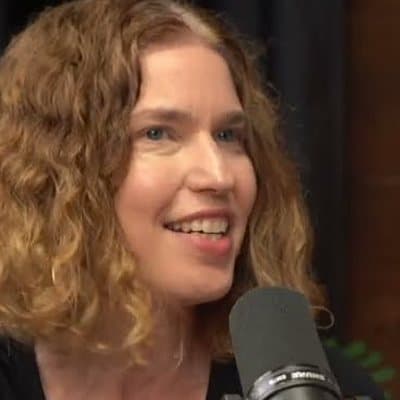
Hilary Mason has watched New York AI since the early data-science era. She argues that practical product design matters more than chasing AGI, and makes the case for small language models and harness engineering over chatbot-first products. The second half is about Hidden Door: narrative engines that let people create characters and play inside evolving fictional worlds.
- Founders & Startups
- Culture & Society
Guest
Hidden Door
Key takeaways
- Hilary Mason recalls helping give New York data science an identity: while at Bitly she co-wrote a taxonomy of data science with Columbia’s Chris Wiggins, which grew into informal meetups and the DataGotham event.
- Fast Forward Labs’ first research report, in 2014, was on natural language generation. Its prototype real estate ad writer found that a listing called “cozy” tended to be about a hundred square feet smaller than average.
- Hidden Door’s new Atlas product lets anyone build a playable world in 5 to 15 minutes, and the company will share 30% of its subscription revenue with the creators whose published worlds people play.
- Mason says she doesn’t care whether an AI can build a world alone. What makes a story meaningful is that a person invested their imagination in it, like a song your significant other wrote for you.
- On Starbucks scrapping its AI inventory tool, Mason blames poor product design, not AI: systems should show their confidence and send a share of scans to human labelers for audit.
- Mason passes on a friend’s line that AI isn’t a 10x productivity accelerant but a 10x of whatever you already were, so people who harm an organization become ten times more harmful.
Transcript
Transcript generated automatically from the episode audio and lightly cleaned up (filler words removed, misheard names corrected where clear). Speaker labels were added afterward and may contain errors.
Rob May: I'm Rob May. I'm the co-founder and CEO at Neurometric.
Ryan Eppley: And I'm Ryan Eppley, co-founder CEO of Root Access. This is the AI in NYC show.
Rob May: All right, everybody. Welcome to the show today. We are shooting this one as the Knicks are about to play their second game in the semi-finals. So, go Knicks. Hopefully they win tonight. Got a lot of interesting topics. There's a lot going on in AI at the moment and the pace is picking up. So, lots of interesting news stories tonight. But first, I want to introduce our guest. Probably one of the longest tenured people in AI in New York.
Hilary Mason: It is very possible.
Rob May: I am going to guess. But Hilary Mason from who is the CEO at Hidden Door. So Hilary, welcome to the podcast.
Hilary Mason: Thank you so much.
Rob May: I want to jump into it and I want to start we'll talk about Hidden Door in a minute. Okay. But let's talk about the early days of AI in New York, right? Because you were you were a data scientist. You were blogging so people knew who you were. And like tell us what those early days were like. Like what kinds of people were reaching out to you. What was New York like? And then and then you did this company FastForward Labs. Like when was the moment when you were like, "Oh, AI starting to take off in New York City." Like like kind of just walk us through a little history there.
Hilary Mason: Yeah. So, I grew up in New York City. My family's been from New York City for many generations. I love New York City. And I moved back here around 2008.
Joined a company called Bitly. So, you might remember it. Short Links on Social Media right as it was starting up. And I was the scientist there because I didn't really want to be a software engineer. Was like doing all this machine learning stuff. And the idea was like, okay, we made this URL shortener. You know, we're making a company out of it. We don't really have a business model. We don't really have a product beyond a URL shortener, which as everyone knows is like not a real business yet. Go invent the future of the potential product business model we might have out of the data assets that we're collecting. And this was awesome. I was coming out of academia. It was incredible data. And it was back in a moment when like we didn't know what social media would be. Like I know for most people listening to this right now like that feels very naive but it was a very naive moment.
And I started doing you know building models on data. We built a bunch of stuff like all these experimental products. We built search content recommendations analysis. We were tracking attention across all the bit.ly data to different essentially like named entities extracted and we could do queries against it like what are people who live in Times Square reading about cheeseburgers right now? It was super cool and the kind of work we were doing there was there's this cool data set you know what can we learn about people about the way information spreads and social environments what can we do to build products that are useful to people
and I realized that you know this was not just computer science and it was a practice that a lot of other people I was meeting were also doing but we didn't really have a single identity for it. And it was also not just software engineering, using the same tools in many cases, but a really different way of experimenting, reframing questions, trying to imagine what something might be useful for. And so we sort of convened a little group of folks including folks at New York Times R&D and folks at Columbia and NYU but then also people working on a variety of different startups and sort of said oh we think there's a thing here.
And along with Chris Wiggins who was at Colombia at the time I wrote a little essay that we published on a blog you know like an a taxonomy of data science like what are we even doing? And that sort of brought together more people and then all of a sudden we had this community of people who were coming from the social sciences and then from computer science and mathematics and statistics and biology and healthcare all of whom were like hey we're doing the same thing can we talk and that led to a very informal like you know come have drinks sort of meetup which led to an event we did called DataGotham which was New York City's data and the whole idea of that was let's just get people telling the stories of their work. Where the math is the same but the products, the businesses, the outcomes really different and that was everything from government and intelligence again to healthcare to like sports like predictions to like predicting the like allergen seasons like incredible stories of data work.
And that community just started to grow from there. And this was even before like maybe a few people started to have a job called data scientist and then there started to be some M's programs around it but it was really at the beginning of that and New York was one of the really strong tent poles I would say that sort of out in the Bay Area you had the more the big tech frame of data and machine learning at that time but it was very Facebook Google centric whereas here we had this just intense diversity because New York is a city of diversity and a city where people are interested in many things.
Ryan Eppley: Yeah and it's just it's pretty interesting mostly on like the taxonomy because maybe like 10 20 years ago right like I'm out of college over a decade now and a lot of my peers when they got their first job was like a data analyst and it was really hard for them to transition into like a full stack engineer at a company even though they were more than qualified just like a data analyst had a tough time transitioning. Nowadays though, it's like, oh, you're an expert in data. Like, you're some of the highest quality people that people are looking for now. So, it's funny how that that terminology of data analyst was kind of looked down upon a decade plus ago, but now it's like what everyone's trying to hire for.
Hilary Mason: Well, it's the same thing with AI. I mean, when I was in grad school, I remember telling a really cute guy at a party what I was working on in machine learning, and he like turned and walked away from me. Like, it was so not cool, and now it is cool. It's all like what what drives status, what's useful.
Rob May: Yeah. Yeah. That's awesome. And so what led you to do FastForward Labs?
Hilary Mason: So fast Labs was a company I started in 2014 and I was living in the space between startups giving doing some consulting advising for larger companies and of course the academic work and I realized there is everybody has something the other communities could use but nobody was building that bridge between them. So what we did at Fast Forward is applied machine learning AI research and then we partnered with our customers to help them apply it in their own businesses also sometimes built products together. We built some very early summarization technology. We did some licensing of basically I would say it was like a halfway house for weward nerds. And then we became our customers like AI nerd best friend. And that was a really fun business to build.
And back in 2014 we did our own program of research. Our very first research report was natural language generation. And that was because I got obsessed with this South Korean AI boyfriend app that got banned from the app store. And then it turned out the API they were using, it got banned because it was telling little girls like horrible things that were fairly abusive. And I was like, how did this thing get made and I went and found it and it had been crawling Tumblr and Reddit to like learn like language and doing a terrible job of like essentially copying where you want to learn it. No. And you don't want to put that in front of children and like but it got me really into the natural language generation techniques of the time and so yeah we did our first report on that in 2014 and that was really fun because we were looking at all of these emerging AI capabilities and trying to pick the ones we thought were going to be really impactful and valuable and then also help these really interesting clients use them. And I will say this was a very New York company because only in New York do you have the financial institutions, the healthcare institutions, fashion companies, we had tons of like monthly subscriptions. We worked with some manufacturing companies. Like you could not have built this company like all the applied side of applied AI, right?
Ryan Eppley: Yeah. Well, it's great that we have this AI stuff, but like what are we going to do with it all? Oh, New York is like the hub of so many different places to apply this now.
Hilary Mason: Exactly.
Rob May: Yeah. And so natural language generation at that time, was it even neural network driven or were you guys having to design grammarss?
Hilary Mason: And we used a bit of a we used a statistical approach at the time. But it was still very like we would learn structures and then essentially create statistical Mad Libs like one step above markoff chains. Okay. But it did work really well for any domain we trained on. Like our our prototype there was a real estate ad writer and so you would put in like the structured data. So like a two-bedroom, two-b apartment by Central Park West and it would write the little ad for you and be like this cozy home filled with sunshine. Well, we found all these statistical correlations like the word cozy meant it was like a hundred square feet smaller than the average or like sunfilled meant something else you didn't want. Like it it was just sort of like reverse engineering the stats of real estate in New York. It was really funny.
Rob May: Interesting. And so what led you from that to start Hidden Door?
Hilary Mason: Yeah. So that company was a ton of fun to build at a very exciting time for AI machine learning and I sold it to a company called Cloudera which is a data platform vendor and then ran their AI machine learning global business unit for a couple years which was also really fun and sort of scaled up that the customers we were able to work with.
Ryan Eppley: And you stayed in New York that whole kind of transition.
Hilary Mason: I stayed in New York, but I have a lot of frequent flyer miles. Yeah. And yeah, I'm a New Yorker. That's part of the
Ryan Eppley: You put your flag down.
Hilary Mason: Yeah. Yeah, you can you can hire me. You can acquire me, but I will stay here. I love to travel. Like I will visit you wherever you are. But, but yeah, this is my home.
Rob May: And so, tell us about So, what does Hidden Door do? And you guys just launched a new product today also.
Hilary Mason: That's right. So what we do at Hidden Door is completely different. We're a entertainment trans media company. So when I left Cloudera, I was still obsessed with language generation. And this was back in 2019, early 2020, like really convinced there was unexplored surface area to build really cool products around it. I think that was right, like given where we are today. But we thought it was just maybe technically possible to take the magic you get from like the best tabletop role playing game session you've ever had, take the book you love or the movie you love, something by an author or or creator who has made a world that you just want to keep thinking about and then mash that together to create a digital game experience where you can sort of imagine your favorite author sitting at the table with you telling you a story, but you get to have your own character. You get to be your own person inserted into that world. And so we started it six years ago now, the week before the pandemic. So that was exciting. And yeah, it's been it's been a lot of fun.
And so what we do at Hidden Door now is we have a platform where you can jump into a world, make a character, and role play. All runs on the web, so on your favorite mobile device. And you can share moments and your friends can build on the moments you share. And then the product we launched today lets anyone with an idea for a story or a world make their own playable world in like 5 to 15 minutes if you're going pretty fast and you know what you want and then they can publish it. And we also launched alongside that product a revshare plan. So for people who publish their worlds and get people to play them, we will share 30% of our subscription revenue with that creator pool.
And this is one of those things where we're in a moment where a lot of people who write or a lot of people who create art of whatever form reject AI because so much of the industry has has shown up and be like been like, "Hey, I'm going to steal your stuff. I'm not going to pay you and I don't need you anymore." And I think there's a better way. And I think you can design if you start from the data to the models to the product experience to the business model in your distribution like you can actually build a business that says hey we love your imagination. Like that's the thing that that we value. Let us you know help you make more money from the book you already wrote and keep your fans excited about it. And for the fans we get to like play in these worlds in a way where we can drive stories. So I'm really excited about this.
Ryan Eppley: Has it been mostly indie authors using this? Like who's like the first kind of ideal user for for this or what have you seen become like the power user?
Hilary Mason: So for the last two years we've been doing primarily licensed worlds working with film producers. So we did a world based on the graphic novel The Crow around the time that movie came out. We've worked with a set of science fiction authors. I'm personally a big sci-fi fan. We've done a partnership with romance publisher and done some romance stories and we've had some romanty like very popular genre right now for good reason. And but these are mostly people who already have a traditional publishing or you know distribution and this is an add-on to that. With the product we launched today which we call Atlas anyone can come in and build that world that they have in their head and I'm really excited about it because when we started this company one of my beliefs was that a lot of the stories that are worth telling that aren't being told are because not everyone has access to like publishers not everyone gets an agent. Not everyone has the time in their lives to sit down and write a full novel, but they have brilliant imaginations. And so, I'm really hoping there's like some college student out there who's going to see this and like take her notes from her D&D session and make something incredible.
Ryan Eppley: And what does that injection point look like when you say those notes? Is it like I would use NotebookLM and I'd like create something or would I do it in Atlas or what do I come to the table with?
Hilary Mason: You are you are way more techy than most of the people using our product. So we have two ways you can create a world. One is take your notes or a story you've written, paste it in, and then we run a bunch of little machine learning models that extract like who are the main characters? What are the vibes? What's the writing style? What kind of plot do we have? Is it fast? Is it slow? Is it murdery? Is it romancy? Are we in space? What are the special laws of physics? All that stuff.
Ryan Eppley: So you'll onboard them, right, from even just like some notes that I wrote in my journal or
Hilary Mason: and this is the other piece, if you just have it in your head, we've created I would call it a wizard experience that will ask you pointed questions. And as you answer them on the right side of the screen, it's sort of developing your your pitch and every question changes it a bit and you can put in reference points like it's kind of like this book and this book, but also this thing is different. And what we're trying to do with this is create a product experience that feels fun. It feels like everything it comes back with, you should either love it or really hate it. Like if you look at it and you're like, "Eh, that's a failure for us." and the goal is to really ask you those sharp questions and then propose different options so you have to think. So even if you don't publish on Hidden Door, the end of the process, you should walk away with a sharp idea of what your world could be, what your stories could be. And that's been a really fun product design challenge for us.
Rob May: Yeah. No, it's really, really exciting. Are you're doing all like the 3D modeling?
Hilary Mason: There's no 3D. It's mostly words and 2D art that gets assembled as you play.
Rob May: Okay. So it's interesting, right, because you're you're you're kind of giving creators superpowers really, right? And I'm with you. Like I think creators of all types should try be like I get they should be protecting their IP to the extent that they can but they should also be trying to embrace these and extend their their capabilities. But I'm curious, have you has there been anything about the user behavior, the things people create, the what has surprised you where you're like, "Oh, I didn't expect that to be so popular. I didn't expect this to be, you know, I didn't expect people to think about it in this reverse way that we think about it or something weird like that."
Hilary Mason: Like, yeah, I think so we've only launched the product last night and today, so it's really just getting in the hands of people we don't we haven't personally invited. We have a whole really exciting list of creators who have been using it for a while and giving us feedback and are launching worlds. A bunch of them up already and a bunch coming over the next couple weeks. I think the surprising thing for me is the difference in the level of depth of a world. And I'll say one of my colleagues Haddie who is in addition to working with me a brilliant comedian made an I am am I the a-hole world based on the Reddit forum. That's awesome and it is really funny and also like you don't need to spend a lot of time in there to really get the idea and get the joke. And then a couple of folks have taken full novels and created these incredibly in-depth storylines that you can follow through. And they're big and ambitious and like epic. And so that's the thing that's surprised me is that we can go from something that is essentially like a throw not a throwaway but like a you know a 30 minute okay cool I'm gonna text you a joke it's funny. All the way to something you could imagine playing for months.
Ryan Eppley: But that's I think that's you know that's a great success. If you were to like look in the crystal ball three years out from now, is most of the traffic from indie authors or is it from working with like a Disney or like one of my favorite, you know, games growing up was like 007, right? So like it's like, oh, we've licensed 007, they created a world in here, you get a B James Bond now. Like do you think it's mostly indie or big one or what do you think is going to happen?
Hilary Mason: So you said five years, which is a really nice like far future time frame. I can I can be a CEO, right? And like tell you what that future is going to look like because what we have actually built is not just a role playing game platform, but it is a narrative engine with memory, consistency, storyline modeling, quality, and the secret is like we write a lot of our story lines like beat by beat and then we adapt them into somebody's world. So, we can talk about that if you want. Because it applies well outside of fiction, but what it really is a game engine layer around any fictional world that has story and character. And so, five years from now, and it'll be a lot less than five years, you can take that and layer on whatever end experience you want. But then have it go back into that system. So, what I mean is that you could have that 3D world generated from that structured representation of the narrative, play a scene, have that go back to the system, and then go back to the text format for a while or chat with an NPC and then go back to the 3D world.
And it's that ability to or even throw in video or throw in a like, you know, comic book version. It's that ability to go from one one form to another where fans can really experience the thing they want the way they want it where it fits in their lives and in their time. And that's the thing that that I want to nail in five years.
Ryan Eppley: So I'm like, you know, reading Lord of the Rings and all of a sudden like now I'm in the battle. Yeah. Right. Like and I'm oscillating between this.
Hilary Mason: Yeah. Or you're making Yeah. You're and you're in there like you're fighting but then you're like zooming out and seeing it from you know that epic movie perspective right
Rob May: it's one of those create your own adventure books but like in this AI era I read the GI Joe ones when I was a kid you can do anything you're not just limited to the like do you go left or right and combinatorial like things mean that you have to die all the time so Atlas is both the product and is the marketplace like how do you host this marketplace for the revshare
Hilary Mason: yeah so on our hiddendoor.co. You can go, you can see all the worlds that have been published, our license worlds right at the top. And then all of the ones being created by the community. And yeah, they're all tagged. If you spend time in the fanfic world, those tags will all be very familiar to you. But sort of pick the ones you like and then as a world creator, you can keep it for yourself. You can publish it and share it. It's like YouTube. You can have a private link that only people you send it to can see or you can publish it into that catalog and people can discover it.
Rob May: Okay. Well, you've heard it. You got to go create your own world.
Hilary Mason: Yeah. It's going to be very cool. Come come play stuff.
Rob May: Let's dig into the you mentioned sort of helping the machine learning models a little bit. Mhm. And so I'm interested in one of the common topics that we have here on the show is the West Coast obsession with AGI and the belief that just like scale I mean I think it is starting to die a little bit but the belief that scale of LLM was just going to solve every problem. And so I'm curious a little bit about what where you think the sort of like how you think people in AI mostly think about it at this point. And, you know, do you think that do you think we're a long way away from you needing no human intervention to do some of this stuff or we're short way? Are you are you a total AGI skeptic or like just
Hilary Mason: Okay. Yeah. Think about some of that. Let's play. So I think that whether you need a human to do this or not, like it's totally irrelevant. I don't care about the world a machine has come up with. I care about the world a person has written that's meaningful to me. And sure, there can be an infinity of, you know, fictional universes, but are they meaningful? Like it is if you like if your significant other wrote you a song. Yes. It might not be as good a song as like the Rolling Stones, but you'd be like, I like this song more.
Yes. And it is that any person has invested their imagination in creating something. And I think world building does exist as a skill distinct from novel writing or like it shows up in a bunch of places. Like a lot of the best game masters of tabletop games are great worldbuilders. I think kids who are born in high school can be great worldbuilders, right? But like I don't care if an AI does it on its own. Like what meaning does it have to me? And it's the same with most art. Like so there's that hot take like maybe AI is creative. Maybe it could do it. But why does it matter? Like what matters is the stories that bring us together as people and the products that get those stories to us, whatever they look like, so we can come together, not so we can each go off in our own little AI hole and talk to a robot for the rest of our lives.
So that's one. The second thing is if you'd asked me two years ago about AGI, I would say it was a West Coast religious problem. And you know, this is New York, we're very pragmatic. It's a little bit of the like where's the money? I would go further than that now and say like if we did the thought experiment as technologists around LLMs and say like okay so what would adoption of LLMs look like? What would the market look like if there was no OpenAI and there was no sort of west coast AGI like hype? And I personally think it would be just as big financially but much healthier with tons of safeguards. And by safeguards I don't mean gatekeeping and I don't mean reducing the efficacy of the systems.
I just mean that the way like ChatGPT being a chatbot is sort of the original sin of our current moment of product design. Everybody makes a chatbot and then they put a tiny disclaimer that's like anything bad is on you and then they tell kids to go kill themselves and like it's just like they are pushing the responsibility for technical expertise around what an LLM can do down to the end user who does not have it and we're missing the opportunity to build better things or to do the work collectively as an industry to build companies that build better things that just make more sense. So I think AGI was both a religious marketing tool and then now has become a bit of like quite damaging. As a technologist I do not see the path from here to there. And you know I talked to a lot of researchers many of them work at these companies and even there there's a little bit of the like like there is there is no secret. There is nothing that somebody has figured out and we just haven't heard about it yet.
That said, I would not say I'm a skeptic. Like I am a huge believer in the tech and a tremendous optimist. And I do think that like LLM quality and efficacy has sort of hit a moment and maybe it'll keep improving, maybe not. But the thing that has improved tremendously in the last year is actually the harnessing and the context management and the system around it. I don't think that's appreciated nearly as much.
Rob May: Yeah. Oh, well, we were talking before the show about small language models and like yes, the biggest thing that we have found is that if you put a good harness around like say a 20 billion parameter model can do a task. You can probably move it down to eight to 10 billion parameters if you're going to fine-tune it, you can probably go down to two and a half to four if you're going to put a good harness around it. And those harnesses can be really task specific. And so this this whole harness engineering world is going to become really interesting, I think.
Ryan Eppley: No one used the word harness even like last year unless you were really I didn't even hear it until Q1 of this year. So just a couple months ago.
Hilary Mason: Yeah. No, I think it's a tremendously exciting area.
Rob May: Yeah. And did you see Oh, this wasn't on our list to talk about, but did you see Yeah, let's transition to some news. TS up. I think it was Meta came out with a Facebook or somebody came out with a Meta Harness paper which was like they had evolved harnesses for specific use cases, which is kind of cool. We I well, you know, we'll have to put in the show notes. It wasn't in here originally, but so your AGI commentary is interesting because our first news article of the day is about Starbucks has scrapped their AI inventory tool because it miscounted stuff and everything else. And so I've been thinking all day about how to make a joke on LinkedIn about like well if we invent AGI it's going to destroy us. I don't know how to tie that back to like doing inaccurate inventory, but like you know there's Yeah, there's something there. So, do you think this is a, I mean, you were involved in implementing a lot of these kinds of projects. Is your I mean, I know we don't have any insight into this thing. We just read about in the news, but like is your guess that like Starbucks did something wrong, the AI was bad, whatever. You've seen projects like this fail. What's typically the cause?
Hilary Mason: If I'm blunt, the cause is typically people not considering the environment in which it's going to operate and making poor product and technical design choices. And I'll I'll make that really specific. So, I get I read the article. So, it's like you have an iPad app and you scan the milkshelf and it tells you what's there and what isn't. Totally makes sense. What's the dumbest way you could think to build that? Well, you make a ChatGPT wrapper or something and you pass an image over and you accept whatever comes back and you show that to the person using the app and they're going to be like, "Sure, whatever." Like, I'm getting paid hourly, but like I got to go, right? I got a lot to do. And so you're going to get bad results.
If you think about how you might build something like that, so you don't get bad results, you think about things like, showing them confidence intervals in the display. So if the whatever the system you're using is like not sure of what something is, it sort of labels that. This is a personal peeve of mine for years way before LLMs is products that don't actually they make a classification without a confidence.
Yeah. So there's one, right? And then you have like okay, how are you doing QA on this? Like how do you know if it's giving you the right information other than to wait several months and have people complaining like in another channel because it's causing inventory issues, right? I would bet they did not do a lot of like live you know save an image, send it to a labeler to test like a certain percentage of them should be audited, right? So I can kind of imagine how this has gone.
Ryan Eppley: So many edge cases when it comes to their product lines. You know, different types of shelves, different types of products, different types of products on different types of shelves, and they have different lighting, different hours of the day. There's just probably so many edge cases that it's hard to be perfect.
Rob May: So, related to edge cases, that leads into one of our next articles, which is Waymo has paused their service in Atlanta because the robo taxis can't deal with flooding. So, this was my favorite article to read for sure. Yeah. You know, and so we've had all this promise. I think the first time Elon Musk said we would get full level five self-driving was 2016. So we're 10 years past that. We still don't quite have it. We are We have gotten much much closer and it is much much better. But again, like you know, AI models driving into the floods.
Ryan Eppley: Like what's the Moses baby? They thought it was just going to part. They they were ready for it. I mean, I also feel like we've all been in a Waymo.
Hilary Mason: Yeah. Yeah. Yeah. Cool. I really like it.
Ryan Eppley: Yeah. I love the experience. I feel s futuristic. But going back to the edge cases of like weather is really tough to navigate. Even for like drivers sometimes, right? Like human drivers really struggle with rain is we've all been in that moment. It's like what's this person doing?
Rob May: I think they only recalled it for like certain moments in certain cities though. So, I think they've at least identified quality assurance in some way or form. I think they also rolled out in the Bay Area, LA, Phoenix, Arizona, I think somewhere in Texas. I don't know offhand where they went after that, but none of these markets have flooding.
Hilary Mason: Right. Right. So, it's a new environment in Atlanta. And it is not at all a surprise that Atlanta would have different challenges. Right. So, like hard for models to generalize outside of their training distribution, right? Like this is not something they do well. Yeah. I would say that this actually seems like a really healthy way for a company to respond when there's an issue like this. Like acknowledge it, pull it back, figure it out.
Ryan Eppley: Yeah, I'm sure they'll solve it.
Rob May: Yeah. And you know, it's going to be interesting because I think as we are entering entering this sort of like early acceleration of applied AI adoption, like I think you're going to see a lot more use cases like this, right? Which is of both these stories like the Starbucks story and the tech crunch story because people are figuring out how to use the new tech. They're figuring out the limitations. So I expect we'll have a lot of this to cover over the next year or two.
Hilary Mason: Yeah, you're going to be busy.
Rob May: Yeah. Okay, next story. California Governor Gavin Newsom published published a executive order today and he has ordered you we talk a lot about job loss in AI and there's two schools of thought. There's a lot of studies that say you know AI is going to take all these jobs, it can do all this stuff, whatever. And then if you talk to like Jensen Huang, who admittedly has to talk his book or whatever, he would say like well if you're deploying AI just to cut costs, you're not being very creative, right? You should be giving your employees superpowers and doing whatever. And so, so this executive order basically just said for California entities, they they all need to study what they should do about job loss from the perspective of should we subsidize or incentivize corporations in certain ways and what impact would that have. I'm sure it'll cover, you know, a lot of people in AI are fans of what do you call it? I'm blanking. When they they give every universal basic income, UBI. And so how you've looked at a lot of angles of this. Have have you looked at AI policy much and do you have an opinion on how people should be thinking about these kinds of issues?
Hilary Mason: So I am not an economist or an expert in policy. So I'm just going to give you my personal opinion being a CEO and existing in this economic environment which is that there are many this is a complex system with many factors and there are certainly cases of people saying oh I'm laying people off because of AI which is not really about AI but it's a good story and the market really rewards that story as opposed to the like I'm just really a bad CEO and overhired and my business isn't growing so yeah right so like there are a lot of things going on that are not just technically based.
That said, it is very much changing how people work and it can be really good and it can be really damaging. So, a friend of mine told me that like people like to say AI is like a 10x productivity accelerant, but actually it's not. It's a 10x of whatever you were accelerant. So if you're actually fairly damaging to an organization, like it's 10x more bad, right? And I think that, and you probably see this from the startup perspective, like the people who thrive in startups are people who do not stay in the little box determined by their job title. And the boxes for every job are changing. Like there's no inevitability that a software engineer should be a box, right? Like we just have that. We don't have web masters anymore. They're like, I remember when that was a job, right?
And so a lot of this is a mix of like we can grieve the like eight hour days spent working on like 200 lines of code that is fun like but we can also be excited about what it changes for our employment. And then looking at it at a broader scale, you have California which has one game and it's tech. And tech right now is in the business of layoffs and not in the business of growth hiring and trying to figure out what it means to be big tech in a world where the overall landscape is changing dramatically. And I don't think any of them really know. And then you have a lot of people who are being economically they're at least being told a story of economic disadvantage. Like they're useless and that's horrible. Like nobody wants that. And so generally this seems like a great idea to have people looking at the complex issue and hopefully reporting back to the public, but it's just my hottake and I am unqualified to have one. So there you go. What do you think?
Rob May: New York should do something like this. What do you think?
Ryan Eppley: I just don't know what the outcome happens even. You know, so many of the policy things is like, oh, we'll put together a report. Yeah. And then nothing happens, right? For what? I just don't know what's going to happen from it. And then it's also, I think, his grandstanding moment as he thinks about his own running later. Oh, I'm taking the stand. You called this out very early in the podcast, one of our first episodes, saying politicians over the next couple years are going to get across their message of either they're for AI or they're not for AI. They're not for data centers or they are for data centers. And it's going to become a hot ticket item for basically lobbying for public interest.
So I think that's a part of this as well. It's like oh I'm for the people we have to hold these tech companies accountable and you know it might be the case a lot of the times but there's I think it was just cloud fair. They just laid off 20%. But they've grown 30% which was one of their strongest quarters. Some some statistic like that where they're growing faster than ever before, but they just laid off a massive amount and the CEO posted on on X, hey, we're just more productive with less people and we're growing faster than ever. So, this isn't like we've overhired. It's just like we're finding that we can be way more profitable. So, what happens then? I think that article has some truth to find out what happens then.
Rob May: Yeah. I think I have two thoughts on this. One is I so I went really deep about four or five years ago on universal basic income and I was like because people it was really popular in the mid you know 2016 2017 18 time frame people talking about and I was like I wonder what do I think because people are throwing in all kinds of stats so I read a book on it that looked at all the studies that have been done where they've tried it in different places for the last 40 50 60 years I read a bunch of research papers and the conclusion that I came away with when you look at what happened is like theoretically it could work to do it in the United states, you'd basically have to make it work economically, you'd basically have to get rid of almost every other program, right? You couldn't give Medicare and Medicaid all you would give this in lie of that. And you'd have to get rid of like the mortgage deductions, all these kinds of things. And so this happened in some places, and I know this would happen in America. What would happen is we would promise that somebody would get elected on UBI, they would do it, and they wouldn't get rid of the other stuff, and then it would bankrupt the country.
So like I So I hope the politicians are looking at some of this stuff, right? Because they're going to try to have their cake and eat it too and all that. And I just want to call out you mentioned something that we should probably have a whole show on this at some point, but like you talk about like one of the challenges here is like you're dealing with these complex systems. And I think people don't think about that enough. One of my favorite books of all time is called the logic of failure and it was written by a psychologist who studies how poorly humans deal with complex systems because they don't understand feedback loops and they don't understand nonlinearities and all these kinds of things. And so, yeah, we should we should think about that because even with AI, like a lot of these things are hard and what what looks like it's growing slow could be a doubling that you really have to think about and what looks like it's taking off could be something that's really about to crest. And you know, and to your point on safety, like you want to design these systems so that they have levers that pull against
Hilary Mason: I think it is. I love that. I'm gonna read that book and I think it is very much understanding that these are sociotechnical systems and we are almost not allowed to have sociotechnical conversations in tech like the to your point about status earlier if you start talking about how people feel when they're using a product like that's lower status than like here's my C optimization of like some algorithm right and like we can play both games but we are not set up to have that really nuanced layered conversation and so it's happening here and here and it's with a lot of angst and you see it in the product designs that are shipping too
like I had a rant on LinkedIn was it maybe even this week because Slack rolled out this whole like modal popup blocking my morning I'm on my way to say hi to my team and it's like AI features are here they might be wrong and we're turning them on for you and they're here. Go. And I'm like, what? What does it do? Like, you're not even going to tell me I'm a customer. I'm like, yeah, it's AI, though. I don't care. Like, and I am not opposed. Like, I want them to build better search, better notifications, better people finding, right? Like, there are so many things they could be doing, but the product marketing was terrible. And this reflects the discussion and the complexity of the discussion inside Salesforce, right? Because they put out this product that is so far away from the conversation they should be having that is nuanced and layered and thinks a lot about like how does this fit in people's lives and it is so frustrating to see and I'm not just picking on them like I've you I can pick on Gemini I can pick on Microsoft like we can go across the board and look at the product experience it's the same story
Rob May: well we like to end on a New York-based question okay so the question I was thinking about today is do you have a store in New York City that you like to go to maybe to shop, maybe to browse, whatever that you would probably say like only in New York is there a store like this?
Hilary Mason: Oh, that is a good one. Only in New York.
Rob May: Yeah. I And I will tell you the one that I've never bought anything there, but I'd love to go look on 14th Street around Fifth Avenue somewhere. There is a light bulb store. All they sell is light bulbs and they have colorful light bulbs and they have weird shaped light bulbs. It is fascinating to go into the store. I am skeptical that there are any other light bulb stores like that in the rest of the country.
Ryan Eppley: Demand for light bulbs are up, I guess.
Rob May: I don't know. I don't know. Wild light bulbs in there.
Hilary Mason: Have you ever been to Canal Plastics?
Rob May: No.
Hilary Mason: Okay. This is another one of those places where you're like, I need a piece of acrylic in this shade with this kind of glitter with exactly like 5 millimeters thick and I'm going to use it with this kind of laser cutter, etcher, whatever. And they got you. That's and like you can just walk on in and like look around and it has a smell like you know one of those smells that's just like encoded. So yeah that only in New York can you wander into a place like that. Trying to think what else. What's yours?
Ryan Eppley: Do you have I don't know. I feel like I feel like almost every city that's big enough has like the diverse stories that you're talking about. It's just like maybe they're just like not as obvious.
Hilary Mason: Okay. Could be. It could be.
Ryan Eppley: I don't know. I'll give a shout out to other cities for once here, right? Like I think other cities got a light bulb store. I don't know. I'm not positive, but not like this one. We'll see.
Rob May: One of our audience members be like, "Of course there's a light bulb store in like Philly or something like that." They'll send us one. So cool. Hilary, thanks for being on the podcast today.
Hilary Mason: Thank you so much. This is fun.
Rob May: Yeah. And those of you watching, please like us, send us guests, leave comments and questions, sign up for our newsletter. We have a newsletter now. You're going to see a lot of events and other things that we're doing. And then go check out Hidden Door and their new product launch and create create a world and tell us about it and tell Hilary about it. So, thanks for watching. We'll see you next week. The next