Episode 23 · · 48:19
Your AI Is Broken Because Your Data Is
About this episode
Gabi Steele’s diagnosis for agents that don’t work: the data foundation underneath them is broken. She traces her path from data visualization at the Washington Post to teaching at Columbia and Parsons, and the lesson her co-founder took from WeWork, where a hundred-person data engineering team still couldn’t keep up with the company’s data.
- Enterprise AI
- Founders & Startups
Guest
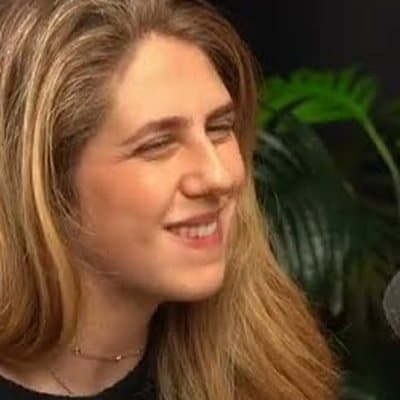
Co-founder & CEO, Preql
Key takeaways
- Gabi Steele calls Preql the janitors of data: it builds knowledge graphs from Slack, Teams and email so agents get context, such as which of three systems’ revenue numbers is the real one and who owns it.
- Steele recalls the start of WeWork’s downfall: the new co-CEOs asked a room of technologists who thought WeWork was a technology company, few hands went up, and the technology team was let go.
- Preql first targeted business teams, which Steele calls a critical mistake. Finance teams found it through inbound instead, and once text-to-SQL agents got good in June 2025, CFO budgets grew from six to seven figures.
- Steele argues hallucination is a marketing term for a product being wrong, and that enterprises can’t ship anything agentic without a data context layer, such as the semantic layers Preql comes from.
- On fundraising, Steele says she skips associates because their deals rarely close for founders who don’t fit the pattern. Investors want to meet her team, she says, but not invest, so they preserved capital.
- Steele says New York lets AI founders build where their customers are, without the old pressure to move to San Francisco, which she calls a homogeneous echo chamber.
Transcript
Transcript generated automatically from the episode audio and lightly cleaned up (filler words removed, misheard names corrected where clear). Speaker labels were added afterward and may contain errors.
Rob May: I'm Rob May. I'm the co-founder and CEO of Neurometric.
Anna Kirk: Hi, I'm Anna Kirk. I'm go to market lead at Thread AI.
Ryan Eppley: And I'm Ryan Eppley, co-founder CEO of RootAccess. And this is the AI in NYC show.
Rob May: All right, welcome everybody. Our guest tonight is Gabi Steele of Preql. Is that Preql like the before Preql AI? Okay. We have a lot of interesting topics for her. One I want to dig into the fact she's a data engineer which is a big a big issue today. Data cleansing and you know all the AI is built on your data. And also she worked at WeWork so we're going to ask her some questions about how that imploded and everything else. First of all I want to give a shout out to our sponsor be present. So, if you use social media and you get sucked in by the algorithms, Be Present uses the algorithms and the same strategies that the social media companies use to keep you hooked, they use them to get you off your phone, keep you off your phone. So, if you want to get years of your life back so that you can spend time like watching this podcast, then you should definitely check out check out Be Present.
Let's get started. I you know a lot of times we just jump in with the guests, but I we have some some big news this week that I is really important and I want to jump in with this which is there are rumors that as OpenAI goes and looks to go public and IPO, they're missing their numbers, their revenue numbers, their signup numbers, and everything else. And so I'm curious, number one, I it may not be true, but assuming it's true, what do we what do we think the reasons are? And are we concerned about this for the state of AI or is this just good old competition and they're just getting their ass kicked by other people?
Anna Kirk: I We had talked about this a couple episodes ago related to like well like their consumer motion is not like converting as quickly and those like margins aren't scaling and they've like really doubled down on consumers. I could see that potentially being part of it, but also you know I feel like with the amount of capital they have, they could just acquire their way out of this problem.
Rob May: That is true.
Ryan Eppley: I just think there are so many other great model providers at this point that you're in the you know small language model kind of world like there's plenty of different applications being leveraged without OpenAI anymore that like oh this is cheaper this is better or in some cases like it's open source and people want to support open source so I've seen a lot of that in the communities that I serve like people don't want to use a closed source model for a whole host of reasons
Rob May: yeah I feel like it's a mistake the United States made to be so focused on closed sourced stuff.
Gabi Steele: But I really I really like these moments in the history of our short AI whatever short AI history. Like if we date back to 2023 when GPT first came out, the MIT report, I quote it almost every sales call I'm on where it proved things weren't working. And I think we're just we're not even at the beginning of the beginning of things not working. And if OpenAI is publicly talking about missing I believe it was their internal goals. I'm not exactly sure. So, not to play too close to they'll be fine. I agree. They could probably acquire their way out of it. I think the challenges they're facing, they're going to be faced by the other competitors as well. And we're just hitting a moment where things are starting to hit the fan. I don't know how far it will go. Demand seems to be there. Whether that demand is shifting whether the whole compute and there's the people have totally over or underestimated what it means to deliver AI at scale I think that's the high level problem
Rob May: do do you think there's a problem in AI where sometimes if you're too early to a piece of the market you get anchored on the wrong thing so like they they hit like GPT3 was out for I a year and a half the on the API before ChatGPT came out which was the conversational version of the API and when you could do that something like that took off and we realized like, oh, the killer app for AI is conversational search. Now the killer app is like openclaw, agentic, coding, all this kind of stuff. Like do you think maybe they got so anchored on the ChatGPT stuff and remember like a year ago they were going to be like the Google killer, right? And Google was going to go down because of this and like maybe they missed the boat on what was coming next and is that a problem in these new markets in general?
Gabi Steele: What's crazy about these AI products is the scale of revenue and we can talk about the venture side of all of that as well, but the supernova that you know gets to 100 million in ARR in a month or whatever it may be. It can definitely be confusing when you're driving that much and with GPT they did so well with the chat but I think they've also experienced what you're sharing which is moments where they were too early. I agree with what you're saying. I want to find more ways to disagree because I think that's what this is all about this conversation. I think that they may have missed the mark here. That also buys them time to make an adjustment before the next player misses the mark again. And I want to return to they haven't quite figured out what 2026 today. What does that mean for the coding side of things? I'm sure you talked about cursor and X and all of what's going on over there. Clearly code generated AI is having a moment. It's meant a lot for our business, too, because I'm on the data side, which we'll get to. Will that moment be fleeting and will they completely kill engineering as we know it today? I think people are wondering, I don't know if they really know the answer.
Anna Kirk: I also think about this in the context of like this space is evolving so quickly and like part of my brain is like is this just like a mini like secular like cyclical shift where we're seeing a moment where everyone's invested in like enterprise orchestration and infrastructure and like the harness layer and I like I'm also very excited about what the consumer interface is going to look like and maybe chat like maybe OpenAI is going to own that space and it's just not mature enough or evolved enough yet. So maybe there's a little bit of like premature. I mean, I can't believe it's only been like two months or so since the Super Bowl. Cuz if you remember, Anthropic's entire campaign during February was no ads in the LLM kind of like results because the whole rumor was, oh, OpenAI and I think they actually started to OpenAI is going to start putting some, you know, snippets of ads within search results and things and that was like the consumer kind of facing product that they were rolling out and I think there was a huge push back. So that might have affected actually some of their revenue targets and things because they assumed that maybe ads were going to be part of that, you know, pie chart of revenue.
Ryan Eppley: You're right. I think consumers right now, we're still onboarding so many people. I, you know, I'm 32. I have friends that still have not used it more than like once or twice occasionally kind of a week or a month. I'm using it every day. I'm using AI almost every hour, right? And like consumer UX has not changed fundamentally at all. Like it's still like chatbot I am going to like type a response and receive an answer via text. Like I think that still has to change and evolve. And like we're still waiting for that to kind of hit.
Gabi Steele: I talk to CFOs all the time, a lot of the customers that we sell to who say to me, you know, I can't work with LLM. It's too slow. I want a dashboard. And that is a crazy kind of world. We well different parts of the history where they they want dashboards on screens in their office and that has been the case for 15 years. Why is that not changing with GPT and I think they're a little bit behind the eightball there but what you're mentioning as well around the Super Bowl and how we started this podcast with be present things are moving attention is so short for these tools that like because things move so fast you're going to be behind the eightball especially if you're at the forefront the way OpenAI is so how fast can you actually adjust and maybe That's why I do think there's an openness to the conversation around, okay, we missed the mark now, where do we go next and where are others going to fall?
Rob May: So, you want to hear something crazier than the dashboard story. I still subscribe and have since 1996 when I was in college to the paper version of the Wall Street Journal. And the reason people are like, why would you store the paper? Because when you spread that out and you like it's so efficient to be able to just see the whole thing like really quickly and like flip and see what's interesting and like I see stories I would never see online. It would never recommend to me and you can skim stuff fast and like I just find it like it's such like if I can avoid doing something on my phone and do on my laptop, I will. If I can avoid doing something on my laptop and do it in paper, I will because it's just it's a bigger better experience for a lot of things. So, yeah, side slight side tangent, but I'm curious to hear all of your responses. Like, what is the most intuitive interface?
Like, is it is it text? Is it sight? Is it voice? Is it tactile? I think it's tactile. This is why so this is why I never bought everybody thinks I drive a Tesla because I'm in tech. I drive a pickup truck and I don't like touchcreens. And the reason I don't like touch screens is because I don't like to have to look at it and go through menus to do like it's like if you need to adjust the heat or the AC, you just reach down and you feel the knob. And I like that and I think we're I think we've lost some stuff in tech. And I think AI is going to do some of that as well.
Gabi Steele: But you know, it's for me it's a pen and paper. It's like truly the mark on the page. I studied fine arts in my undergrad, which is a weird thing that they say it impacts your brain differently when you use pen and paper. It there's a different feeling to it. And I wonder about the next generation. We were chatting about this earlier. How they're going to interact because there's such pressure to be fast. I took keyboarding classes.
Rob May: Yeah. So, got to got to reach for that.
Gabi Steele: Exactly. [laughter] Getting But being able to make and also whiteboarding like that is that going to exist in the offices of the future. A [clears throat] question I have around the UI is also if the world is going to be run by agents, will we lose that and what does that look like? I don't I haven't listened to all of the conversations you all have had. I'm sure it's come up.
Rob May: We've been talking about that because harness engineering is a relatively new thing. Yeah. And I just wrote a post this weekend about harness experience, right? Which is like how do you design a harness experience instead of a user experience when you have to design everything for agents?
Gabi Steele: Exactly.
Rob May: It's definitely awesome to get stuff done without you having to be involved. But at some level you're like, well, what should humans do? Because if I build an agent and you build an agent and our agents talk to each other and that's how we communicate and keep in touch, like we're not really keeping in touch, right? You're not really building a relationship with a friend or a colleague or anything else. And so like where are those boundaries? And I think those are some interesting social and ethical things we have to figure out as a society as we go forward with this stuff.
Gabi Steele: Where is the Wall Street Journal? I think that's so meaningful. The way that that paper feels and is spread across the fact that you still it's reasonable.
Rob May: It's pretty reasonable.
Anna Kirk: Yeah. One more aside. When you think about like, okay, like agent to agent communication, something about that feels a little bit metaversey to me. Like maybe that's not actually how the space will evolve. That's not like how we're designed or built. Like people want to interact with other people for the most part.
Rob May: Well, but agents will interact with other agents. So, believe it or not. So, I know I know a guy maybe we can get him on the show. He doesn't live in New York, but I know a guy that started a religion for agents.
Gabi Steele: Religion.
Rob May: A religion for agents. So, you know, that could
Ryan Eppley: Yeah, that could be cool.
Rob May: Oh, religions are great businesses.
Gabi Steele: Like, yeah, exactly. Maybe that should be my next thing.
Rob May: Imagine if you started Scientology. Like, that dude's rich.
Ryan Eppley: Yeah. For I mean, I have a friend that's starting a bank for agents in the finance world because they're going to need their own bank accounts because they're doing so much automation work. Makes sense. And yeah, he's he's an interesting guy. You could probably get him on. He lives in Miami. But they are going to be beings of some sort. Religion is a much funner one.
Gabi Steele: Yeah. The cult of computation. [laughter]
Anna Kirk: Yeah, you know, I that guy's got to have like a suite of controversial beliefs. I would love to have him on the podcast.
Rob May: Actually, he does and he's a very he's a very normal dude, but we'll we'll have him on this really takes off.
Anna Kirk: I think Yeah, he feels the power.
Ryan Eppley: Yeah. Yeah. Gabi, enough about our like random candidates. We love to hear like who you are, what Preql is and Gabi.
Gabi Steele: Yeah. Well, I've like I think I've peppered a little bit in. I gave you some like hints, but I'm the CEO and co-founder of Preql AI and we are a data infrastructure layer cleaning agentic platform mainly supporting the office of the CFO at enterprises because their data is really critical. It's really messy, fragmented, and we act as the in between of all of your sort of systems of record, your SAPs, your net suites, maybe you're migrating to AI native solutions, and then the consumption layer.
Rob May: So, can you talk a little bit about like so for for people that might not go like deep on tech that are watching this? So, like we're cleaning the data, like give us an example like what does that mean?
Gabi Steele: So, we're I mean, I was talking about this earlier. I've been watching some my husband likes the Toronto Blue Jays baseball and there's these guys that come and clean the field at a certain point when I'm like okay that's the moment when you should actually tune into the game because I think it's pretty late. We're like the janitors of data in the sense we do a few things. So data isn't really meaningful. This is a big part of 2026 without context. So, we'll create knowledge graphs and maps from the humans by going into your Slack or your Teams or whatever email channels that you're using to collect that and keep it up to date. When you think about revenue, for example, as a metric, it's probably coming from three different systems.
Rob May: Yeah. And they never quite sync up. Like every company hits this around $5 million in revenue, they go like the billing system, our own back-end system, and our CRM like do not have the same revenue number.
Gabi Steele: Correct. And you have to pick one that is your version of truth, especially if you're the finance team delivering it and then especially if you're a public company, there's all sorts of different ways that this challenge appears. The question is, is it acceptable to have three different definitions or 500 different definitions and how do you get to that place where you pick one and who should own it?
Anna Kirk: That's an interesting question like how do you when you're designing your own product think about like triaging and like escalation of like what is a kind of like L1 filtration of that kind of data and how do you think through that problem?
Gabi Steele: So we do a lot of this like meet the human in the loop thing. So there today and this is why agents come up so much. Our agents are the cleaning agents that pass that work over to your consumption agents which are the large language models or small language or wherever you are. But in order to get them that context, humans need to make a bunch of decisions. And some of those decisions you can actually take from systems of record where you know you have permissioning and governance. Who's the metric owner? You can find that pretty quickly. Who is the last person to make that change? When we did approve a report somewhere, but then there's somebody that left the company. We call it the win the lottery problem, but or the hit by the bus pro. You know, someone leaves, they've got all this tribal knowledge. How do you go and track their behaviors to understand what they were thinking back in the day?
And I'll use this to talk about one more story which is my background. I was a data engineer, a data visualization engineer for a period of time as well in at the Washington Post actually during Trump's first election. But my co-founder was employee 50 at WeWork and she describes spending years of her life defining what a desk was because that was a core metric. We know what a desk is, but what is a desk and what is a member and what are these things that contribute to a company growing from 50 to
Rob May: So I know a guy in Boston who went to MIT and did his PhD research on natural language processing on what does soon mean [laughter] and you're like I love that.
Gabi Steele: Yeah. And so it's these are hard problems sometimes for machines to understand.
Rob May: Desk and soon.
Gabi Steele: Yeah, exactly. Yeah. You'd be surprised.
Ryan Eppley: How did you pick I mean it may seem much more intuitive but how did you pick office of the CFO as a starting point like there are so many different applications for this type of technology.
Gabi Steele: So they picked us. Okay. We've been Leah and I Leah's my co-founder. She was my boss at WeWork actually. And brought me in to join this data engineering function and had been doing all of this really manual SQL work for a long time. When we work imploded, exploded. We talked about that. We might reference the catastrophe at some point. Leah and I founded a data engineering consulting business and we were supporting all sorts of different companies. Typically executives but CMOs would come through the door. CEOs who needed to understand their revenue metrics or their marketing metrics and their data was not centralized and we would implement time and time again snowflake or redshift or bigquery write the data clean it when we launched Preql as an automation for that as a product just around the time GPT came around business teams were our target critical mistake because that's a huge market but FP&A the function of the FP&A within the office of the CFO inbound on our website And then we narrowed down which is like a kind of interesting way to do things startup wise. They had bigger budgets etc. So we hated the office of the CFO at WeWork. They used Alteryx. They use these crappy tools behind our back. Weren't connected with central data at all. And we've come full circle into really appreciating these individuals job.
Rob May: Is that why we work had a problem? Because I asked this because a good friend of mine started had the idea to start a similar company at the similar time. And when we work raised the big series A, he came to me and he's like, "Every way I run these numbers, if there's any downturn in the real estate market, the whole thing falls apart. I can't figure out how they're going to do this long term." Like, did people at WeWork realize that? Cuz like and ultimately it proved like he was right now, you know, WeWork had raised $10 billion or whatever. Were people there aware of it? And was it was it a data problem that they weren't doing enough analysis or everything else or they just didn't like what was that culture like there?
Gabi Steele: Such an interesting question. So I think that when people ask me like how accurate is the HBO show or whatever series or documentary you watch it that regardless you don't need to because you know enough from the news and everything else but it is accurate. That's exactly what it felt like. The one mark that I feel like gets missed is this employee fabric culture where yes we were all kind of involved and appreciative of what was going on but we were in on it. I don't think anybody was hyper confused.
I had this story that I tell is when the downfall began, they gathered all of technology, which in New York City was a thousand people at least and there was even more. And the current, it was two co-CEOs that came in to like run it while Adam was ousted. I looked at this room of people and said, "Everybody in this room who thinks we're a technology company, raise your hand to the technology department." And very few hands went up. It was like Halloween. It was like a dusty room. It was quite a scene. And that followed up with and that's why you're all getting fired basically and all of technology was let go very quickly because the 150 data science leaders or data engineers that Leah had helped was managing were not required for the real estate business that was being run. So they more or less said hey we'll show you what a desk is. Thank you very much. Here it is. And quite literally. Yeah.
And I think like there's an optimism in wanting this hustle culture. Beautiful. At the end of the day, WeWork is a great product. It's not an AI product. It's not even a tech product, but I love their spaces and I still would consider using them for, you know, my own startup offices. We're in them all the time. So, I think it's about how you tell that story, but the employee fabric was incredible. And at the moment, it was a moment. Like, I could pee on any block in New York City just with my black cart, you know? It was cool.
Ryan Eppley: Yeah. I feel like Adam's just like a generational talent, though. It's hard to hard to deny.
Rob May: Oh, I know a guy who sold his company to WeWork, his startup, and he's like, you don't understand. He's like, when you're in the room with Adam Neumann, he's like, you just he's like, it's just a different feeling. He's just like got that presence that almost nobody has. And like, yeah, he's that's like the same way I know a lot of historians talk about Bill Clinton, right? If you're in the same room with Bill Clinton, like you're going to feel that appreciation.
Anna Kirk: Yeah. You know, it's interesting how like Adam Neumann really pulled that off though because how do you raise so much money on such a clear real estate play as a tech company? It still baffles me and then make a billion dollars anyway.
Gabi Steele: Yeah. Yeah. We call it the no fail club. Once you're in, you're in and it doesn't matter. He is incredible, charismatic, has raised a lot more since. I don't know if we haven't raised money from him. Did your friend make money or not?
Rob May: It's a good question. I don't know. We have him on the show.
Gabi Steele: Yeah. I have some friends that sold to WeWork and some did well and some of them we actually think Yeah. Now that I'm thinking about it, they did not make what they thought. I mean, if they took stock, they probably didn't, but like there were companies we were could spin off later, right?
Rob May: Cool. And so, so tell us a little about like Preql. So, agentics become a very very hot thing, but there's a lot of debate. So, like for example, we provide small language models to people that are spending too much money on openclaw. Mhm. What we actually see in the data is maybe like 5% of people that use open call actually use it for anything significant. So everybody wants an agent, but then sometimes they like don't know what it it should do or they have it do stupid things or they do things where you're like it's actually just faster to do that yourself than let your agent do it or whatever. Like like what's the agentic status in like data financial data cleansing I guess? Like how what's adoption like? What you know, do people actually understand it?
Gabi Steele: So, first of all, prequels obviously at the forefront. We're doing stuff that no one has ever done before. Good for you. But primarily because in June of 2025, which was, you know, pretty recently, text to SQL agents finally got good and Leah and I were waiting for this for a really long time. We're at the end of the day a forward deployed educa. Like that's the training model we've been a part of and VCs don't want to back services businesses right so Preql spun out of our services company independent raised money from Bessemer ventures Felicis under the idea that we're going to be product first and there'll be no services today when you think about threads and where Angela came from and the Palantir folks it's the sexiest thing ever to be forward deployed so that is where adoption changed in comp also in parallel to the actual technology and that happened last year. So I'd been selling to CFOs before then, but that's when six figure budgets became seven figure budgets and we saw a huge amount of interest in a solution like ours so that they could make their own agents. It's like you buy it to build it. We're at the early days though.
Anna Kirk: It's a pretty good bet to go against VC wisdom all the time. Conventional wisdom. Somebody actually wrote a post one time and it was like if you look at the hottest space in VC in any given year that was actually the worst year to invest in that space whether it was like metaverse or like crypto or you know you had a VC background for some
Rob May: I did I was I was yeah I was at a fund for a while and I will tell you your I well so here's the problem right they think of themselves as like these mavericks of capitalism that just like back the bold ideas then 5% of them are maybe 10% right and there there's there a handful of really great people in VC that I've worked with the vast not yourself but in yeah the vast majority of them are like just like they you know they they're they're limmings they follow the they follow the trends they do whatever like the real way I think to do VC well so like so I'll give a shout out like Jenny Fielding who is you know one of my investors and used to run Techstars here and she's basically like I have a small fund I can't compete against the big funds on obvious next things that you should build because they'll outpric me they'll write a bigger check she's like so I have to take bets on things that like I don't know if this will work this seems kind of weird and like that's the kind of stuff she funs And like I think that's where VCs should live.
Gabi Steele: That's cool. Yeah. I mean that's definitely an approach. I think the worst VCs are the pattern followers because and they're perpetrating the problem like that. Like how is it that I know threads so well? There's so few pairs of women engineers doing this work. We don't look like the rest. This isn't what the podcast is about. But the goal is like how do you spot the weird and interesting ones knowing that you also are gambling and it's Vegas and you're taking one bet that like you know hopefully one wins.
Anna Kirk: Well, it's like a little bit of like a prolonged pump and dump scam a little bit of like if you can be the one to like mark up someone else's investment, but then like you find another like stupid investor who will mark up your investment. Like that's the whole game. And like that's why it becomes this like consensus driven problem when it's supposed to be a game of outliers.
Rob May: But this is a good I mean this is a good topic for this podcast since we're a little bit irreverent. But like what do you guys think about so my experience has been like men are much more likely to play that game than women. And so you know you guys you're you're a female founder. You work for a female founder who she knows. You and I have had a lot of conversations about women in tech and all that. And you know I think women tend to have imposter syndrome at a slightly higher rate than men and stuff like that. So like how does it like when you think about like women being more pragmatic and like maybe less risky and all that like how does that translate into startup building startup businesses or does it or is it only the women who will take the kind of crazy risk that men will take that do it or what do what do you think is are you going to say you go first
Gabi Steele: I've talked about this a lot okay it's not just like women we're like we're female founders and we're we're women at work look at that like we have jobs and we leave the house in the morning and that you know that is just Not there's not as many of us because naturally that's the whole the whole tradife movement or whatever would hate you, right? Yeah. Exactly. So like it does it have an effect? Of course it has an effect. And I think that the ways that you deal with yourself in the world and the reactions of the world to you are decisions you're going to make consciously or subconsciously.
When we're talking about the investor decisions, it's so much more important for me. Also, I have a really nice litmus test when I get in the room with someone. I raised a lot of money on Zoom because it was during COVID periods. If someone's an you're going to feel it right away because they're going to treat you in such a way immediately, which is amazing when you're raising money and you're marrying these VCs and you can't get divorced from them. You really need to know who's good and bad. So, that's kind of the cool thing about being women minority, not what they're looking for. The thing is that's harder and I was listening to some of what Charlie said on the podcast because he's a friend around you know these VCs the conviction you really need top dog people to come talk to you and invest in you because a lower tier person or a woman in the fund is less likely to give you a term sheet. I'd be curious what Angela would say, but like for us, I don't have time to talk to associates, not because I'm better than them, because it is so much less likely that if associate brings someone who looks like me or someone whatever, that we'll get funded. And when you're fundraising, it's all about momentum, it's all about FOMO. So, that is one thing I learned.
Anna Kirk: Yeah. I mean, I can't speak for Angela, but I can say like it it does give you more attention in the room for better or for worse in some respects. And like I think there are ways to play to that. Part of that for me and I'd be curious about your experience as well is like reconi reckoning with my own like femininity of like it feels weird to play into my femininity because I've always been like the convention is that you shouldn't do that. Like you need to be more masculine in order to like appear confident and successful and ambitious. But there is an element of like no like you can play into your softer side which feels weird.
Gabi Steele: Yeah. You have to figure it out on the fly. Like we've been very I think the way we've treated our capital is very different because of the that we're pragmatic people. Maybe it's our gender, maybe it's not. Like you I think different personalities, but we definitely get told all the time and especially when we're fundraising, you're what they're looking for, but in reality, you're who they want to meet with, you're not who they want to invest in. We're not a pattern that can match. So that's the trickier part. And then we've actually done a really good job preserving capital which worked out well because now we're living in an age of AI where again what's sexy is small teams revenue per like employee. Yeah. So it it's all come around nicely. That somewhat is pragmatism but it's also luck.
Ryan Eppley: One of the my favorite kind of things that happens often. So my co-founder is just a really gifted electrical engineer. She has designed motherboards for the military multiple patents for missionritical technology. Super low-key though when she's talking to investors and like I have to like hype her up. Yeah. We'll meet investors, typically men, that like have read about AI for hardware or they're like into re-industrialization and like we get into like a technical deep dive and she'll just DM me on Slack be like, "This guy has no idea what he's talking about." And it happens more often than I want to admit. And it's just really funny how she has to like just like try hard not to like make them feel uncomfortable.
Gabi Steele: Oh, men don't like that.
Ryan Eppley: She and because at the end of the day, they're still they're like a partner at a really good VC fund and we're not in fundraising mode right now, but they could be important to us in the and I just see these texts coming in Slack in real time. She's like, "This guy has no idea what firmware is." I'm like, you know, we'll keep it short.
Rob May: It's interesting. I had thought about that piece because like as men like particularly when you when you grow up when you get to like high school and college age like all we do is mock each other right and try to like belittle the other ones and like that's part of the culture. So like right I think we would have a less probably not a bad time to do it but I can see like a lot of people wouldn't want to be like you know dressed down by a woman you know they don't appreciate that.
Gabi Steele: No, no, it's I have a hard time not reacting. And I'm DMing Leah and she's like, "I know that they're challenging your intellect. Just ignore it." And you need a witness. So, if you can be that witness, and that witness doesn't need to be a woman, it just needs to be a witness. I think that's helped us so much. We talk about that all the time. Like, just being aware that like, okay, I just left that room and they were awful and when we walked in, I didn't know that they were. And if you don't mind, if you're just taking capital from people and you're not looking for some critical thinker who understands firmware, which seems pretty basic, but whatever, maybe you will even take their money because money is green and it doesn't matter as much. But you have that information now and it sounds like you can be really supportive in those moments.
Rob May: Anything you want to add as a last thought?
Anna Kirk: So, I will say I'm thinking back to this moment a couple weeks ago where I was talking to I was talking to someone who was basically like, "Oh, like dual female co-founder like you should really play into that. Like there are so many interesting like funds and opportunities for women." And I think the one thing that it it becomes such a rabbit hole reputationally when you lean into that and like yes, maybe there's capital available for that. Maybe I'm shooting myself in the foot by saying this, but like I the minute you are branded as a female founding founded business as opposed to just a business is like dead.
Rob May: So, so I so a good friend of mine is I so I won't throw out her name because I don't know if she wants to be mentioned, but former MIT professor, two or three time tech entrepreneur. She's just badass. Early in AI, early in LP, just all awesome. And I invited her to come on a panel one time and she's like, "Hey, I can't do it." And I was like, "Hey, you know, I was like, the conference needs a woman or whatever." And she's like, "Just once I would like to be invited to something because like I'm the expert on this, not because I'm the woman on this." And I was like, "You know, I think you're the I know you're the expert on this, right?" Like, but I'm saying like the conference needs a woman. So there's like a can be true. Yeah. But it so it's like so I definitely get that like there could be some tension there sometimes as well, right? Like they always talk about like if you're a public company CEO as a male, nobody comments on how you dress. But if you're a public company CEO as a woman, Yeah. You get comments on your hair and your makeup and your dress and you're like, "Well, that's weird."
Anna Kirk: And it's so funny cuz like it never comes up internally. We're never like, "Ah, like look at this amazing powerful woman who's like leading this." No. Like your makeup's looking great today, Rob. Is that what you needed? Is that what you needed to hear?
Gabi Steele: No, it's also you're one of 17 people if you're running a public company as a woman. Like there's more men named Dave who run as CEOs than there are women CEOs at all. So it's like the numbers to go back to the data and we can return to the product. When Leah and I raised our initial seed round that year we were told there's all this capital for women it was 22 or 23 0.9% of funding went to women that year like the lowest ever.
Rob May: Yeah. I mean I will tell you after spinning NVC I mean it's not just women. Anybody that doesn't meet the like not a white Yeah. They they they have this like, you know, stereotype of what makes a good founder and that's what they look for. And like I have not seen it be true. You know, I've seen people that went to state schools. I've seen people that didn't go to college. I've met VCs that are like, "Somebody who's gay can't do this because they don't have the drive and like the mask." And you're like, "What?" Yeah. You're like, "What?" You're like, "It's none of it makes any sense. You can make up an excuse for anyone and then suddenly they all look the same. And particularly because companies are very idiosyncratic and they take on a lot of the traits of their founder and you can build companies lots of different ways that you can you can be a like you know introverted focused operational CEO, you can be an extroverted charge the hill CEO. Like there's lots of ways to successfully build a company.
Gabi Steele: And it matters and the I mean the way that I've been able to combat this and especially since I'm coming into the field like I've raised some money, we're present. I've started a couple companies. The only way to actually change this whole model is by intentionally choosing a CEO or a co-founder to be the minority, the woman who does you actually have to make that change when you're in a position of power. If you don't do that, the VCs are going to continue to behave that way. And it's even you can't pin them down. There's no way like to say just invest more. We've gotten all this backlash with in this moment as well. But different conversation, different timing, but it's present tech.
Rob May: So let's keep talking a little bit about the agentic stuff. So where where do you think agents go next both from a technical and from an adoption perspective because I think there's a lot of there's a lot of belief that like we were talking about before the show started, right? Like h how much do we use agents? How much do we send stuff to them and let them go do stuff? How much humans are going to be here like like in three, four, five years, do you think agents do more unsupervised stuff? Do you think there's more agentic stuff, but it's more humans involved? Like like what's your perspective on where this is going?
Gabi Steele: So, I'll talk about it from the lens of Preql because it's a big part of what I'm thinking and doing today, but then there's the more like macro version of this. We've been solving this data challenge for all of our careers and we've been solving it for the people before needing to solve it for the agents, but now it matters for the agents more than anything else. I do think we're getting into an era where you're just going to be seeing more and more of these autonomous whether you want to call them bots or agents or actions that are taken on behalf of a human. And in order for that to be done accurately and not hallucinate, which is an amazing marketing term for just incorrect, bad product, bug, whatever you want to call it, wrong, the way that that is going to be done is how we connect with them, how we feed them information. And that's why this is a moment for context. Semantic layers is the space that we come from. An English language layer that translates information to computers, to different systems. That's popular today. I don't know if it will stay popular, but there's going to have to be a way that we interact with these robots to allow them to do the work we don't want to do.
Like, forget replacing our jobs, but there are so many things we don't want to do today. And so maybe that means we get to spend more time with our Washington's Post, Wall Street Journal, physical newspaper. Like there's an optimism to all of this that I get most excited about. But how do we get there? We will have to figure out how to set our fleet of agents working and running in such a way that they are accurate, helpful, and not putting us in danger. It could be financial. There's a lot of different things. So that's where prequel's coming in for the enterprise at least the they can't build or implement anything agentic without a data context layer. So that moment is exciting and it could even solve some of OpenAI's challenges when you talk about how they miss the mark with the consumption. That's one product. It's one part of their there's a lot of different ways that this comes into play. But that's what the 10y year what will things look like in 10 months.
Anna Kirk: At what point do you typically come into an enterprise and find that you are most able to add value? Is it like they're like mid migration and it's more of like a data migration problem? Is it more so just like kind of operational in terms of like these numbers mean different things and I don't know how to reconcile them? Like what is the kind of like pain that you find most kind of pressing?
Gabi Steele: So, this kind of returns to the office of the CFO, which I think was a really big unlock for us because our product is horizontal. Like, we can work with any data from anywhere. We've built agents that see data that they've never interacted with in the past and they can manipulate it. But when you're there's a Lyft earnings call that folks might have heard of from 2024 where things went really wrong. And security products. Cyber has a huge foot in the door here where like the horror story, there's a data risk exposed and you lose billions of dollars. For us, it's not always at that scale. Today, we're seeing these budgets open up for AI investment. And if you've got a pragmatic CFO or you've got someone in the office of the CEO that promoted someone to be a chief AI transformation officer from within or some kind of experience level that no one has background in AI, right? So everybody in that senior title is new and someone who's seen a data problem before is going to look to solve this.
And the way they may look to solve this most frequently is with manual data engineers and consultants. And that is so antithetical to the agent age that we're feeling. So that's when we see folks coming through the door and looking for solutions like Preql and the best possible way that we can give them value is within a pilot environment. A lot of people want that forward deployed pilot. We unlock some really meaningful value that saves them on the earnings report because that was a mess or it's an M&A and they don't know if that data is ever going to be useful. FP&A is still continues to be a huge use case. It's one of those things and then a lot of the time it's a pet project of the CEO where they mostly he wants some fun agent to be doing something for them and the only way to do so is to have the data be cleaned and we can show value quickly.
I'd be curious with your backgrounds now selling AI software like what moment you feel like people will sign off on because I think this pilot phase fails a lot of the time. So then how do you get it's not the same as like when I used to buy snowflake it's like okay I put it's a twoe trial it's very obvious now your data is in a warehouse and this gets unlocked
Rob May: but I mean think about how much inference demand has been created just by all these trials right like so
Gabi Steele: [laughter] exactly that's kind of crazy but your experiences I'm curious
Anna Kirk: I mean we go ahead
Rob May: well it's slow right and it I think you build slow and there are not very many companies that I would say are AI mature I would say even for the company that I run which has been a little over a year. It's been hard to raise money. It's been hard to find customers and then in the last like 8 weeks it's exploded because you've had things like Uber's CTO said like we're in April and we've already blown through our Claude Code budget. We have to move off Anthropic. We were pitching like a year ago when I would go into VCs and I was like inference costs are going to spiral out of control. People are going to have to like architect their systems differently or whatever. And I've seen this in a couple they were like no that makes no sense or whatever and now they're suddenly like this is the main problem we have to solve next.
Anna Kirk: So it's yeah I mean I feel like the market is the market of buyers is maturing pretty rapidly within an enterprise landscape. We exist because things are really hard to get from pilot to production. So I actually feel like we're kind of situated in a good spot benefiting from that pilot fatigue in a way. So it's actually benefited.
Rob May: That's what the software Yeah. Yeah. I mean you saw a similar thing, right? Because like when you and I met, you guys were kind of having a hard time raising money and like people didn't believe and like now everybody wants to throw money at your company.
Ryan Eppley: This time exactly last year, I remember being April. And I remember a quote that just stuck out to me is Ryan, I love what you're doing, but no one's ready to vibe coat the tank. And I was like, [laughter] one, that sounds so silly and it's so true. But I was like, you don't believe in three to five years looking back the most important machines will have been using AI to develop them? Like, of course, that's gonna happen. It's just not today because it's not ready yet. It hasn't been fine-tuned. The agents aren't capable of it. Like, and we're going to do all that. We're going to do it, you know.
But yeah, I think I think to your point, like, how have you gotten these things off the ground? For us, we one, our product is like pretty advanced now and we can show deterministic outcomes with our own proprietary tooling that's not an LLM call. They see it and they're like, oh, like are you using this model for that? We're like, hey, like actually this was like an old school mathematicalbased proof and they're like, whoa, that's incredible. And it's funny just like how the narrative has changed very quick where we would never touch AI for updating a sensor on a Boeing aircraft. We will never use AI for any of these mission critical systems and a lot of those companies are coming back being like hey were you talking about doing AI for hardware like that's like something we're curious about now so I think there is a changing of the zeitgeist as well that has to happen
Gabi Steele: timing is a lot of the luck
Anna Kirk: I think a lot of it too is like maturing of like this concept of human in the loop like I've been thinking about that a lot recently you mentioned it earlier on in terms of your product and how you've been able to be successful yeah like the human like it should and I think Angela coined this term at some point, but this concept of like human as a tool where like now like you were the tool being called, you're like the information being consulted. You're then source of truth. Looking back like five years ago in venture, human in the loop was a dirty word. It was like if you have human in the loop, it means that you're not fully automated and you're not going to scale and we're not going to like be a rocket ship, right? It's just so funny how like that even like that concept I think has changed quite a bit in the last
Rob May: should have been your trigger to be like going all in on human in the loop like [laughter] getting back to like the contrarian bet against VC like should have done it.
Anna Kirk: It's a good bet.
Ryan Eppley: Yeah. Yeah. One of my favorite startups just concept. I don't know if it's a great business or not but like rent a human. Have you guys seen this? I just think the whole concept is super funny to me. I don't know if that will like end up being a good business or not, but I think it's a fun Black Mirror moment.
Rob May: Well, there's a lot of lot of things that are talking about. I've read several pieces about, you know, instead of like humans using agents, it's going to become agents automate everything and they use humans as the exception handlers, right?
Ryan Eppley: Yeah. Edge cases.
Anna Kirk: Yeah. We're still going to have to work. There's still going to be job. Like I think that that's the agents will tell us what to do.
Gabi Steele: Yeah. Like there's always this like the dystopia side of everything that's going on. And there is something sad about AI taking over everything and when you think about the next generation and that sort of thing but at the same time like there's a shift that will happen that will give humans still a critical role. We will still run a lot of these systems. It's just what is our role? Are we the tools? Yeah. And that's where we try to be the bridge because I think what's special about Preql and the data layer is like how do we move with the moment? The moment right now is very aware that agents need context. Before they just needed to know what the revenue number was and they wanted to see it in Tableau and a lot of the people I work with today still want that but what you were experiencing Ryan around were you just like a bit too early for something you have to stick it out and VCs obviously want the money now every moment every cycle needs to be they want momentum yeah the but you can't
Rob May: ultimately they're momentum investors they're private market momentum investors%
Gabi Steele: but how do you maintain that over 10 years to IPO it's completely completely impossible. So then you need to learn how to manage them. But if you can stick it out, the moment might come back.
Ryan Eppley: Yeah. We found a lead investor that was an electrical engineer for years at Google and a SpaceX engineer that turned to a VC and he's like, "Oh my god, we live or die off of our tooling. Please help." So you're right. You just got to find the right investors and they'll they'll figure it out.
Anna Kirk: You want to tee us up with a trivia question?
Rob May: Yeah. So, so normally we end the podcast on a like best of New York kind of what what's the best or worse, but I've been reading this book called Vanishing [laughter] New York by Jeremiah Moss. He writes a blog about things that New York is losing as it becomes gentrified, particularly Manhattan and all that kind of stuff.
Gabi Steele: Williamsburg.
Rob May: Yeah. So, well, yeah. So, so he put a wrote something really interesting and I so I'm going to put it as a trivia question and see what you guys think. So in his book he quoted a writer named Angela Carter who in the 1980s wrote this comment. She said cities have sexes. London is a man and Paris is a woman. So my question is what did she say about New York?
Gabi Steele: See you told us to think about this at the beginning and I forgot to think about it. [laughter] You're too busy a guy or a girl.
Anna Kirk: Yeah. I was going to say it's hard to gender New York. And this was the '8s, right? So, it's not going to be some like New York is a spectrum answer, right? [laughter] It's not it's not going to be like a they them like maybe one or the other.
Gabi Steele: Yeah. Which is kind of interesting because we've been talking about gender on this call and what that means.
Rob May: It's not a call.
Gabi Steele: It's a Yeah, it's been that kind of day, right? That kind of night.
Rob May: I don't know. You want to take a stab? What do we got?
Ryan Eppley: Throw me under the bus if I don't.
Rob May: All right. Well, let me let me read it to you and you guys can Yeah. Guess if you can if you can explain what she said. Okay. London is a man, Paris is a woman, and New York is a welladjusted transsexual.
Ryan Eppley: I was going to guess that.
Anna Kirk: Oh, why didn't I say that?
Rob May: That's the whole line. Yeah. Yeah. And the interpretation is that, New York is a boundary crossing mashup of self-expression where people, and this is what we've talked about this, right, because we're all, we've all spent a lot of time on the West Coast. Ryan used to live there, and we've talked about why we love New York. And what I love about New York is I feel like cities have a there's a homogenization of the people that live there. Like people in Seattle start to dress away. People in Austin behave away, whatever. New York has so many people that I think it's the one place where people are very different because everybody's trying to be self exercise their self-expression and really stand out. And that's part of what I like about it compared to say San Francisco.
Gabi Steele: Yeah, I haven't San Francisco this whole call. So I feel like it's I remember why I wanted to come on this podcast. I'm so excited that New York is a place where we are building and at the forefront with AI. I talk about it a I was talking about it earlier today around the fact that like this is a place where you can both build and your customers exist. It's not like a chasing something somewhere else moment. When I started founding companies, there was a pressure and there was until I would say co a pressure. Oh, you're going into tech, you'll have to move to SF for some period of time and it's so homogeneous there. It is so at your you ended up building NFTTS instead of like something people actually use. And I think until recently, the per the first couple years of AI, there was actually hype going on in SF and there was a little bit of FOMO, but thank goodness we're in a moment now where that's shifting again and we do not need to be in the midst of all of Yeah, it's an echo chamber and I think it's just uninteresting and being a New Yorker, you must be somewhat of an interesting individual to just survive and be able to adapt in the city.
Rob May: Yeah. The best kind of agent. The New Yorker agent.
Anna Kirk: The applied AI capital.
Rob May: I like that. I like that. Make sure Madi cuts that out as a Yeah, that's a good The best kind of agent. The New Yorker agent. The New Yorker agent. I Yeah. Any You guys have anything to add to that? That's a good ending ending. So, so thanks for coming on. This was fun.
Gabi Steele: Yeah. Thank you so much. This is such a fun
Ryan Eppley: Yeah. Thanks for being on, Gabi. And everybody who's watching, review us, send this to your friends, watch our other episodes, suggest guests. Anything else you can do to help promote the show. We'd really appreciate it. And thanks for watching. The next