Episode 26 · · 42:29
Building the Next Generation of AI Leaders
About this episode
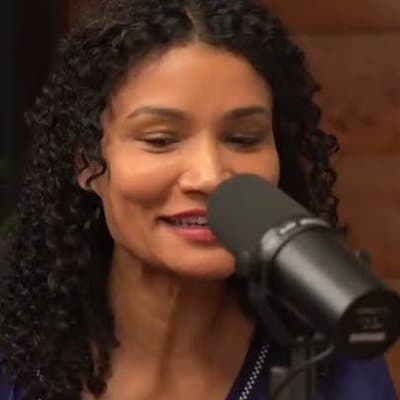
Dr. Taniya Mishra went from early machine-learning research and accessibility projects to founding SureStart, which teaches AI fluency to students worldwide. The episode covers what AI is doing to entry-level jobs, why mentorship and ethics belong in technical education, and whether the race to advanced AI is leaving the human element behind.
- Work, Talent & Education
Guest
Founder, SureStart
Key takeaways
- Taniya Mishra argues the time AI saves should go to thinking and creativity rather than “move faster, do more,” crediting her six years at AT&T Research, with time to read and think, for over 30 patents.
- Mishra describes the workforce shifting from a pyramid to a diamond with fewer entry-level jobs. Without those years of reps, she says, formal apprenticeships and mentorship must fill the gap, backed by industry, education and government together.
- She notes that in the UK and Europe government shares the cost of hiring interns, and argues the US needs requirements plus incentives, since the FATML community showed that presenting industry with data didn’t change its behavior.
- SureStart’s optional courses for students as young as 12 see 85 to 95% completion, Mishra says. She points to CodeBlue, a stroke-detection startup two alumnae began as teenagers that has since raised funding.
- Mishra connects Pope Leo’s call for human agency to her worry as a parent of a neurodiverse child: about 85% of neurodiverse people are unemployed or underemployed, and losing purposeful work is now a worry for everyone.
- On recent BLS data, Mishra says two things are true: the numbers don’t support the job-loss hysteria, yet 20-to-25-year-olds struggle to find work as entry-level openings slow. She also calls out “AI washing” of layoffs.
Transcript
Transcript generated automatically from the episode audio and lightly cleaned up (filler words removed, misheard names corrected where clear). Speaker labels were added afterward and may contain errors.
Rob May: I'm Rob May. I'm the co-founder and CEO of Neurometric.
Anna Kirk: Hi, I'm Anna Kirk. I'm sales lead at Thread AI. Close the door. And this is the AI NYC show. Physics and today we have our lovely guest Taniya Mishra CEO of SureStart. Taniya, do you want to give a quick overview on your background? And maybe you could start from your story of kind of moving to the US and what you've accomplished so far since then.
Taniya Mishra: Yes, for sure. And thank you for having me, Rob and Anna. I'm really excited going by the conversation we already have before we [laughter] got formally into this. We had a podcast worth of stuff in the last 20 minutes we [laughter] were setting up, but that's all right. Yeah. So SureStart is a New York City based AI education startup and we our mission really is very ambitious and very timely. It is AI fluency for students globally. We are a little over five years old and we have a series of AI courses from beginner to really advanced from middle school through high school to early college. And we bring these courses and AI programs to students by directly partnering with higher ed as well as K12. And what really sets us apart is that our courses are anchored in responsible AI use, innovative thinking and building future leadership for our students because what we want to build is not just the next generation workforce but that next generation of leaders and change makers.
Rob May: So, let me jump in with a little bit of a controversial question, which is like the last good the guest that we had on, Hilary Mason, who was on last week. One of the things that she said is she she was complaining about San Francisco and the Frontier Model Labs and she's like they've made some decisions their obsession with AGI and, you know, has led them to like spend money and raise and like build this version of AI like it doesn't have to be this way. And she sort of said something to the effect of like AI might be better if it was if we had taken a more thoughtful approach, a more measured approach. She's like I think there would be just as much AI revenue. I think it would be better distributed amongst more companies and all that kind of stuff. Like do you have an opinion on that based on what you're doing? Because it it sounds to me just from describe what you do like maybe you have a little bit of Hilary's point of view of the world.
Taniya Mishra: I absolutely agree with Hilary in that because that's been my experience. I got into machine learning in 2001. Wow. And I got into it because I had a NSF research grant as a undergraduate where my goal was to build technologies like actually coding ideides for people who are visually impaired. So that the and coding is such a visual activity, right? So building something for somebody who was visually impaired meant using sound and using voices. So back then like if you were coding in Java or some of or or C++ braces were really important. I can't even tell you how many hours of my life, my precious life I have wasted in finding the closing brace. Syntax errors, right? So how do you make a new coder aware of those ideas? We were using synthetic sounds and voices. Of course, they were very roboticized, very canonically AI or, you know, generated from way back when, not how they sound now, right?
But that was sort of my introduction that AI could be used to empower people. And then my PhD thesis Rob as I was sharing with you it was based on building technologies for children on the autism spectrum that so that through like stories narrated by a system they could learn about social interactions which hopefully would generalize to their real world interactions with peers. Because actually one interesting theory is that stories some of the early stories that we you know love to listen to they teach us about how to resolve conflict, how to build relationships, how to negotiate what can be emotionally tricky situations but so taking that idea and using machine learning and frankly my PhD thesis was on synthesizing emotional and expressive voices for children's stories. I mean this was early 2000s. I finished my PhD in 2008. Of course, this was such a tall order because there wasn't even a very good female voice at that time to then think about anthropomorphizing children's stories.
Perfect for a PhD thesis, but like technically quite complex and sophisticated. But what it gave me was this insight that AI could be used for human flourishing, for human empowerment. Like that was my view of AI. That has [clears throat] continued to be my view after finishing my PhD. My work was a lot in accessibility and child directed applications, educational applications, well-being and safety and vehicles. So it has always been in the realm of how can AI be used to empower, democratize and create access. But that also meant that anytime we were building anything, we had to keep an eye on are we taking an inclusive approach? Are we taking a responsible approach? Like bias was not a afterthought. Bias mitigation was part of the process. And in that early like I would say 2016 to 2020 like right before the pandemic there used to be a community in tech called the fat ML community fairness accountability transparency in machine learning community where a lot of you know papers discussions research was around this idea of how you can you know do well by doing good through technology.
So I would say you know it doesn't have to be it doesn't have to be this dichotomy of you know profit and dehumanizing use of AI versus you know the version of AI that you know Fei-Fei Li kind of propounds this idea of you know AI for you know expanding our creativity and you know for efficiencies but humans at the center of it
Anna Kirk: and that's actually an interesting I imagine A lot of your work there and a lot of your earlier research is a really interesting precursor to kind of the social landscape right now around you know certain criticisms around this generation being particularly socially isolated, very kind of digitally enabled, digital first. How do you think about using AI as a tool to kind of expand the access that people have in terms of building that social fluency versus how much of it do you think is kind of that isolating factor that is actually kind of isolating this next generation socially?
Taniya Mishra: You know, I've I've thought a lot about this. It's almost like not not using AI, but the absence of it in a in a nuanced way. So what I mean by that is research has already shown that especially for you know younger kids like 14 and under the impact of digital media or even AI-driven tools that are all designed to attract them to it right the impact that it's having on their neural connections on their brain development and they have also seen what happens when you take away that technology for even two weeks the improvements right
and the whole promise of AI I is that you know it's going to do all the boring tasks so we have more time to do the things that humans do best but right now in the sort of industrial landscape how is AI being used so any productivity gains which so far are quite minimal I'll say but the time that is left for humans in the equation they want you to do more because you know now you have more time so move faster do more what if we let people have that save time to be more creative to think more to be more thoughtful like and when I think when I say this I think about my early days as a researcher. So I finished my PhD in 2008 and for six years I worked for AT&T research as a researcher whose only mandate was to think about all the ways in which machine learning and artificial intelligence could be used in ways that people are not even imagining right now.
And I used to have a office like actual office which looked out onto this screen. It had doors. And I would spend my days reading. I would read. I would think. And you might be like, well, and like what did you produce during that six-year period? I must have produced well over two dozen peer-reviewed papers, more than 30 machine learning and AI patents. Two products that you know went into the hands of thousands of people. My work was involved in it and I wonder if some of that happened because I had time to think. Yeah, I had time to think to imagine to create and how privileged and lucky and most people don't have that. But if AI can produce that efficiency and instead of like taking that additional time and telling people move faster, do more, we told them be creative, think more, play more, like you know what would what would the workforce look like then?
Rob May: It's a big problem. There's a there's a really interesting book. I don't know if we ever talked about on the podcast and I think it's oh gosh the data scientist who wrote it I think her name is Koko Hume I'll see but it's but basically it's the thesis of the book is we overoptimize too much and there's a downside to overoptimization and I think you're talking about some of that and I've seen that a lot and I think it comes from sort of the days of sort of like early days of working on the you know manufacturing line where it was like oh you just put in another hour and you get more things done. But it's not that way with a lot of things, right? And you can, you know, you can think about like if you're an athlete, [clears throat] one of the big problems with like intense athletes is they don't recover enough.
They don't spend enough time resting. You know, you can see you can see like Kora post and Reddit post where people are like, I'm lifting and I'm lifting and I'm not getting stronger and they're like, "How much time are you taking off to let that grow?" And I think I've seen similar things with on the intellectual side. So I think it's very I do I think it's a big problem and I think you know you can you can push a little extra on those things temporarily but you can't run your life that way like you can work 80 90 hour weeks for a while and that's fine but like you can't live your life that way or you become actually less productive I think ab and less creative less happy less interesting less interesting
Taniya Mishra: and you know in so many ways like I The reason I bring this up, this is part of our approach to how we teach AI fluency. And we [clears throat] don't make the mistake of AI like mistaking AI use for AI fluency or responsible AI fluency. But because we bring it to kids as young as 12, like sixth grade, right? 12 and 13 [clears throat] year olds. And they are tough customers. It has to be engaging. It has to be fun. And we set these up as enrichment activities. They're not required to do it. And yet our completion rates are crazy. Like between 85 and 95%. And it's because they are fun. They are interesting. They're engaging. You get to think, imagine, play, build, break, and try again. That's very much part of our process. And we have seen like the amazing things that very young kids have created. We have students who built companies when they were in high school and now and those companies were not just toy companies.
They are companies that have raised funding that this company that I'm thinking about it's called CodeBlue is based out of San Francisco. And the two founders, one was in high school and one was in early college. And this company has built a technology to do early stroke detection as early as I think up to 40 minutes you know before it happens using everyday tools like it is AI that is embedded into your laptop into your phone but they came up with this idea from a real problem that impacted one of their families and they came up with the solution because they had time to test to play to try out things and they had a support network of mentors and I didn't talk a lot about it earlier
but a sort of the heart of our teaching methodology is mentorship right it is kind of both based on like Bloom's research of how one-on-one learning can give you a two standard deviations of improvement over a corporate learning setup but also any of us right if I asked you like can you think of like how did you know have this amazing job that you have, how do you have this, you know, amazing achievement? All of us can point back to this one person or one teacher, right? Or just somebody who invested in us. But these young women they were both they were able to not just build the idea because of the play and the you know the innovation the innovative approach but they were able to sustain it because they had a support network that over five years they were able to sustain it and now that is their job. They run this startup and it has just finished research studies for over a thousand patients in research hospitals across the west coast. I mean amazing but they came up with the idea when they were like in their teens.
Anna Kirk: How do you think about that culture of mentorship going forward? Especially I know this is something that we've spoken about and it it actually touches on one of the articles that that we'll sp speak about in just a minute around that concept of instilling mentorship in light of maybe not refilling some junior roles and kind of what what that looks like from a kind of human resourcing perspective when you look at different companies that are not hiring the next analyst class or kind of entry level software engineers. How do you think about what that space looks like going forward?
Taniya Mishra: Yeah. So to me I mean I'm an engineer by train. You asked me earlier to talk about sort of my background. I'm trained as a AI researcher. So I think in diagrams and the schematic of the workforce that we pyramid which has this wide base and it narrows up I think that shifted to being more like a diamond right there are fewer entry-level jobs at the bottom because AI agents and AI tools will be doing a lot of the automated routine work right that's what that's what's happening that's what is being projected it still hasn't happened I don't I think but that's what's being projected. But the idea is that the human capital is going to shift to the middle of this you know workforce diamond. But that's actually an interesting opportunity that means new people joining the workforce. There are multiple entry points. You can join at the bottom because there will be people who will still be needed to work in these hybrid environments.
But then there is the second entry point which is more towards the you know the middle or the upper half of the workforce. But in order to do these things there are multiple you know entry points. So that's an opportunity but there's also a responsibility. In the past there used to be sort of this learning ladder let's call it right people had time to do reps. When you join at the beginning at the bottom of the workforce you have time you have people above you're seeing what they're doing but if you now have to join somewhere you know slightly higher up well you didn't have the time to do the reps where is that going to come from and I think that's where you know apprenticeships internships mentorship sort of form in a more formalized way I think can fill that gap because actually it and this is where sort of you know education Industry and government need to have this tripartite relationship to make it happen.
Like it it actually benefits industry in not even the long run in like 3 to 5 years to actually invest in a young person through some kind of a apprenticeship or internship program. It helps you know education because they are connected to industry. So what we are preparing our students with the skills they are more directly related to where there will be roles and where government comes in is you know that's why you know we elected you to these positions both to provide the scaffolding but in some ways to incentivize it like if you look in the UK or Europe if you bring on a intern for a company actually the cost for hiring an intern is shared between the company and the government. There's no no such incentive schemes I think in the United States or if they are they're quite limited at least I don't know about any I would love to know about them if they exist. So I think kind of building a tripartite relationship between industry education and government is I think important.
Anna Kirk: Do you think those incentives will kind of evolve naturally as companies realize, oh, oh no, like we've we've not kind of hit the same replacement rate that we need to or or do you think that there will need to be some kind of government intervention or incentive program for that?
Taniya Mishra: Rob, what do you think?
Rob May: I think we're not very good at self-leing as the industry. We're not. We had this conversation the other day about we were talking about universal basic income and the fact that I actually went really deep on it one time and I read a bunch of books and did a bunch of studies and I came away with the idea that like you could make it work but to make it work in the United States you'd have to cancel sort of every other social program. And the way we would actually roll it out would be we would pass universal basic income but not cancel every other social program. Then you would bankrupt the country, right? So like that's how we do things here, [laughter] right? Which is yeah, we're we're not very good at at self-p policing. A few industries have done it here and there, but it's typically only in situations where you have really strong leadership and you know, somebody just there aren't a lot of there aren't a lot of business titans, I would say, that maybe have the morality that titans of previous eras had. And I think it's a problem.
Taniya Mishra: I mean, if I we live in New York City, you know, we all live in apartments, but like look at what the Fair Housing Act did for housing and access, right? I think that this is once again where [clears throat] I think it's so important that we have that tripartite relationship with the government that it should both require companies but also incentivize them to create opportunities for reskilling, upskilling, pres-skilling, you know, use whatever prefix you want. But like going back to the sort of story of the fat ML community, you know that was built to do research and show industry and it was you know a mixture of AC academics and industrial researchers like I was who were doing this kind of work like looking at what are potential sources of bias, what are like you know what are the requirements of transparency and explanability that are needed with the idea idea being that if you show the data, people are going to do the right thing. Nope. Nope. Didn't happen. The community has, you know, evolved and changed. So, I think we need some form of maybe requirement with incentives.
Rob May: So if you go a level deeper on this concept of doing the right thing. I mean one of the things that it seems like you guys do a sure start is you sort of teach a responsible ethical view of AI and you know are you concerned about the fact I know we've talked about on the show before this idea that when you're so as an electrical engineering major if you're a civil engineering major you're required to take an ethics course because they don't want you to be like well you know we're gonna skimp on some concrete because like people die bridges fall down and whatever. So that's but computer scientists, electrical engineers aren't required to take one. And I feel like we had this whole 20 year span where a bunch of tools and products were built, social media products and related things where the whole goal was like get you to click on more ads and nobody ever even stopped to ask like is this the right thing for society? Is this a good thing for the world or whatever? And so I do do you think we're repeating that mistake with AI?
Taniya Mishra: Possibly. I think we have the opportunity to correct that mistake. I think AI AI machine learning right like they're related ideas. So all the failures of trust that we have seen we have experienced we've read about I would say as as someone who is an insider part of this community this is AI is the only field I've ever been in I would call them not failures because of malice but because of blinders as a computer scientist as a statistician unless you were in a specialized let's say healthcare environment or as you said you know civil engineering you were not required to take a ethics class a sociology class like these were not requirements I was very lucky because I actually went to a liberal arts school that was also a Catholic liberal arts school in the Midwest called St. Mary's University. Plug for my university. But I 50% of my credits had to come from the liberal arts.
So, plenty of ethics and philosophy and religion and all of those things. We had to take those courses along with taking courses in our majors, which for me was computer science and mathematics. But that meant that I saw the work that I was doing sort of through this dual lens that was very human- centered. But I was lucky, right? You know, my peers that went to universities that were maybe better known for having really great technical programs. You know, they they were just not afforded that opportunity. So, I would say we have the we have the opportunity to do it right this time. We can you know we can teach people ethics. We can teach them human- centered design. We can give them opportunities to have the lived experience of thinking about especially now with AI being as commoditized as as it is. It doesn't things don't take months or even years to build like now weeks days.
Yeah. You can build a prototype. You can go you know test it out with people. You can ask them for their opinions. There are so many ways to do it in a sandboxed way that gives that sort of begins to open that aperture of your ethical thinking that I think we were just not given the opportunity to exercise when we were being trained.
Anna Kirk: We have an article that's kind of tied to Should we jump to the news?
Rob May: Are you talking about the Pope Leo one?
Anna Kirk: Yeah. Yeah. So, there was an interesting feel free to chime in if I gloss over anything, but there was an interesting call to action recently from Pope Leo centered around kind of this idea of AI needs to center around human agency and there's kind of a big I would call a crisis right now around the potential risk around kind of layoffs and employment issues and whether or not AI is being used to enable humans to have more agency and more humanity or take that away from them. So would be curious to hear both of your thoughts on kind of do you view that as more of an instrument to enable humans and make the conversation more human centric or do you actually view that as a detractor?
Rob May: I just think it's interesting that the pope is weighing in on this because it's not something that religious leaders this is the first technology in quite some time that religious leaders I probably since like stem cell research that like religious leaders have really like leaned into. So it I mean it's probably been a good 15 or 20 years. And so I think it's interesting, but I also think it's important because I think to do it the right way, you are going to need a full sociological solution to AI.
Taniya Mishra: Yeah. I mean, I was delighted to hear it. I was you know, as we all are a little self-centered, I was like, "Oh my gosh, Pope Leo thinks like me, right?" [laughter] or more like I'm so glad that there is alignment in how I have been thinking about AI for almost you know two decades 18 years or so that I've been in this field and certainly that was my viewpoint when I started shore the goal was creating agency as a researcher I had sort of I could read the tea leaves a bit earlier I could see the commoditization of AI that was happening I was seeing how fast things were moving and sort of quote unquote made the bet that in the next decade everyone is going to need to learn about this technology. But what really worried me as a parent to three kids and with a child who is neurodeiverse and so this problem of not having agency, self-reliance and dignity of work has always been on my mind because that's the reality for people who are neurodeiverse, unemployed or undermployed about 85% of them.
So as a family member, as a parent to somebody who you know is neurodeiverse, the worry is continuously is my child not just going to have financial independence, but are they going to have self-reliance? Are they going to have the dignity of work, the purposefilled life that we all love? And now what I felt like when I read you know the encyclical that Pope Leo presented or you know articles on it because it's quite long you know that was like the worry that we had that's the lived experience of people with learning differences or physical challenges is frankly now a worry for all of us right and I think I think absolutely like losing the potential to not have an opportunity to work is so much deeper than not having you know a family sustaining career or the ability to take care of yourself or those you love. It's even beyond that right it's this idea of purpose and you know agency so I felt really heartened by it that you know now we are hearing from you know like global leadership that these are concerns and my hope is there's a lot of debate on you know who is who's going to care about this right but my hope is that this is like this is the start to the raising these important questions and they get echoed through other leaders from you know whether it's industry whether it's you know religion whether it's government right
Rob May: do you how would you guys deal with and so I'm going to throw out a point of view here that I don't agree with but I think it's important to discuss and I'll tell you my point of view at the end if you want but you know how how would you deal with the sort of I think contrarian point to this would be like hey we're in a race for global AI supremacy and all this ethical crap holds us back right or something like that I mean how would you what would be your counterpoint to somebody who would say we just have to go and we can't put a lot we can't handcuff these companies or we'll lose and if we lose it's game over somebody runs the world who solves sort of AGI first.
Anna Kirk: I don't I think AGI is a myth. Like I don't That's what I would say. [laughter] I don't I would say like I don't I don't think it matters who gets there first. I think we're all there pretty closely after them if if you do get there. So yeah, I mean maybe I'm a more of a chronic optimist here, but I think that like the appropriate and responsible usage of AI will eventually in the long term coincide with its success. Like the outcome is that AI will be intertwined with our own humanity and AI is inherently human. And it's not like the lack of humanity. What about you, Taniya?
Taniya Mishra: I agree with you and I think it's a little bit like preaching to the choir here because I think we're we're aligned in this. But the fact of the matter is that I think more people think like us than people who don't. I have two thoughts on this. The first is I as a voice researcher in the past who spent a lot of her time doing this, studying this, I still like to use like I just like AI to generate, you know, long passages just to see how far we've gotten from when it used to take hours of work to get like one nicely read sentence. And I still found many mistakes today in just how the word AI was pronounced in context of a sentence. I will send you those examples. It was really interesting. Sometimes it got it right and sometimes it got it wrong. So we have some work to do. I know everyone's very excited about airdos problems being solved with AI.
Okay, that's great. Like you know mathematical improvements, it can write code but as we were talking before we formally got started, right? Social work. How good is AI going to be when you have to bring together digital skills, social skills, empathy, emotional skills or like social work or go to the other end that companies care about negotiating. How good is AI going to be at that? So I think that there is room. The future is not humans versus AI, it's humans plus AI. I think even as companies we can do good and do well all at the same time. And I think the conversation we are having today, the fact that we are referring to a you know the pope's opinion and the opinion of so many other leaders who are asking many of the same questions. I'm very hopeful. So, it's on that hopeful note that I will say that you know, I'm just really excited to be here with all of you and you know, have this conversation.
Anna Kirk: Wow, that was uplifting. Maybe some more uplifting news. Well, maybe uplifting. We'll see. There was a recent [clears throat] article from the MIT Technology Review saying that an analysis of BLS statistics came out or recent BLS data came out and there isn't the kind of shortage of white collar jobs that we necessarily would have been expecting or that you kind of hear about when you think through like oh the block laid off 40% of their workforce. I have some thoughts here but would be curious is that does that track with your expectations like do you think that kind of hype has been overstating?
Taniya Mishra: That tracks with all the research that I have been seeing both from you know university research but also from large global organizations like the world economic forum that there are like two things can be true at the same time. The numbers don't bear out the hysteria but as people and you know especially as a person who is surrounded by high school and college age students I also see the reality that you know 20 to 25 year olds are having a hard time finding jobs so both of these are actually true and the numbers did show in that article that there has been a slowdown it's not like the absolute number of jobs has grown but there has been a slowdown in the rate at which those entry level jobs are opening up but I think that it's a challenge for sure. So like the lived experience versus the numbers and I think there's a gap in between but the gap is the opportunity.
The gap is the opportunity to do things right. We have to this is like I think it's so crucial the public you know private partnership is the solution. It is not each of us only looking out for ourselves working in silos. It's all of us working together.
Anna Kirk: Yeah. I mean I think you never know when there's a slowdown like that. I think you never know if it's people being cautious while they figure out what's next or if it's actually an indicator of what's to come long ter a long-term trend.
Rob May: Yeah. And or is it like a lagging indicator? It just hasn't shown up in the data yet.
Anna Kirk: I hear the argument a lot around like well corporations just want to use it as a scapegoat because it's a convenient way to avoid attention around your performance that quarter.
Taniya Mishra: Yes. There's a lot of AI washing going on.
Rob May: Yeah, that's a fact. Yeah. And we had the to your point on younger people. We covered the article a couple of weeks ago where there was a graduation speaker I think at University of Central Florida who brought up AI and got booed. So clearly there's a little bit of backlash from the
Taniya Mishra: I mean early from from the students but also from parents like you know as a New Yorker you know we're very passionate even at like the level of a single neighborhood in New York City. There is recently a lot of push back from parents around AI education and it's okay all of these are all emotional reactions that we are all having to uncertainty which is very much part of the ecosystem right now you know kind of going through all the stages of grief that comes from disruption that is happening. We have to deal with our emotional reactions, fear and you know depression and worry and all of those things and then we have to switch to okay what are we going to do about it and I think what we are going to do about it is we have to all put our heads together and say how are we going to retrain people who are in jobs that may get replaced like the jobs may transition and how are we going to train up young people who are going to take that next step forward, right?
Because learning to learn, that is going to be the biggest skill. We have to keep learning and we have to stay open to change, that's kind of the reality of anyone's life, but it has become more pointed in this current AI era.
Anna Kirk: I mean, you probably have more exposure to the younger generations in this context than anyone. How do you think about like are you seeing is it optimism that you're seeing? Is it is it pessimism around this technology? Like what are you seeing of the younger generations?
Taniya Mishra: I think younger generations have adopted it extremely enthusiastically. Like I think I was looking at these numbers from the digital education council from a survey they did in 16 different countries and this these numbers are probably already old but 86% of college students use AI to manage their entire the operational workflow of being a student like in the classroom but the student experience but also what happens after you're done with college like whether it's you know updating your resumes finding jobs applying for jobs that entire workflow they are they've already adopted AI so now it's just like shaping this AI use into AI fluency so that they are also using you know great judgment analytical thinking you know ethical considerations in using these technologies like we I think the young people are already ahead of us now we need to bring in the scaffolding so that we shape it into what you know the workforce needs, what the world needs, and what, frankly, these young people need.
Rob May: Cool. So, should we jump into our New York question?
Anna Kirk: Yeah, I wish we had time for every article that we linked this week. May maybe we'll link them kind of in the in the show or something. Some good other stuff, too. I feel like this conversation could have gone on forever. But maybe we close it out with kind of our question of the of the week. So every week we end our podcast episode with your kind of favorite New York X. So, this week we thought it would be great to pick your favorite New York museum. So, do you want to take a stab at it first and we can go around the table?
Taniya Mishra: Yes, for sure. My favorite is the Frick. It's a personal collection of art from somebody very wealthy, I expect. But going to the museum one, it's a little hidden. And it's very limited in the number of hours you can access it, but when you go there, you feel like you're in somebody's very nice home. So, I enjoy going to it.
Rob May: It was relocated for a while. I know it was in a temporary location while they renovated, but is it back?
Taniya Mishra: It is back now.
Rob May: Amazing. Okay, I got to go there again.
Taniya Mishra: Yes.
Rob May: Well, I would say, well, let me give a shout out to my least favorite. I am not a fan of the American Natural History Museum. I feel like it's boring. Rob, the whole first floor is like di giant diaramas.
Anna Kirk: Anyway, what about the planetarium?
Rob May: That part's better. Yeah. And the upper floors are better, you know, where they have some of the dinosaur bones and stuff. It gets better, but like there's a lot of like boring stuff there. So, but I would say I'm a huge fan of MoMA. And I, you know, have been there many, many times, and I like I like the fact that they're privately funded, so they can do edgy things and not worry. And so they've they've put on a lot of great a lot of great stuff. Although I recently went to there's a serial killer museum now.
Anna Kirk: Oh, fun.
Rob May: Yeah. Downtown. It's like 14th Street maybe.
Anna Kirk: No way. That sounds unscary.
Rob May: It's creepy.
Anna Kirk: Very I am. Okay, so weird weird thing about me that maybe I should not share publicly. I love serial killer podcasts. I'm just I'm fascinated by them and I wonder if it's like due to a lack of exposure to violence in my own life that I'm like I view this as just like an interesting kind of like
Rob May: So if the if the co-hosts go missing sometime, Yeah. Anna's the first place to look.
Anna Kirk: I'll fall asleep. Like I listen to them as I fall asleep and like fall asleep. No question. Like don't doesn't even faze me. I forgot why I brought that up, but anyway, we're going to go to the Serial Killer Museum at some point and that that'll that'll be a fun side quest. My favorite museum is not the Serial Killer Museum. It's actually the Neue Galerie if that I think that counts. Have you been there? Have you?
Taniya Mishra: I have not. And I've lived here for 17 years.
Anna Kirk: See, you learn something new every day. So after the show, we're all going to schedule time to go to the Neue Galerie. It is I believe an Austrian gallery primarily. They have the kind of climpmped woman in gold, which is probably their most famous painting. But the reason I love it is like you walk into the building and it feels like you're in this very nice upper east side kind of brownstone. Architecture is really beautiful, but you go in there and like I think it's because the tourists don't know about it. You have the entire thing to yourself and it's like two stories pro probably doesn't take more than like an hour and a half to see kind of souped to nuts. But you just go in there and you're like 10 feet away from this beautiful magnificent piece of art and like no one else is in the room. And then also they have this amazing cafe downstairs where you they have the best hot chocolate in the world. So my favorite thing to do is like go there during the winter time.
Taniya Mishra: I'll go for that.
Anna Kirk: Yeah. Get your Austrian desserts, get your hot chocolate in. It's fantastic.
Rob May: There you go. Reason number 185 not to be in San Francisco. [laughter] In New York instead. So well Taniya, thank you for being on the program today. If people want to learn more about SureStart or want to like get this for their schools or students like what's the best path? What should they do?
Taniya Mishra: The best path is to go to our website which is www.mmyshorstart like the three words mysurestarttogether.com and then you can just send us an email through the info box and check us out on the website, find us on LinkedIn, find us on Instagram. Yeah, send us a message and we'll get back to you in 24 hours.
Rob May: Awesome. Amazing. Good. Well, love that you're doing good things for New York and for AI in general. And I realized we forgot to mention our sponsors this week.
Anna Kirk: We don't have a sponsor this week.
Rob May: We don't have a sponsor this week. Okay. Starting I mean, or you can leave it in.
Anna Kirk: If you would like to sponsor the show, [laughter] we have a sponsor coming up and are sponsored I think through the end of July, but are definitely looking for more sponsors for the fall. And yeah, thank you guys for watching. Please, you know, like the episodes, favorite us, subscribe on whatever channels you have, send us guests, send us topic ideas, articles that you like. We have a newsletter now if you go to the website that you can subscribe to that covers things happening in AI in New York City. So yeah, thanks for watching. The next