Episode 37 · · 47:16
Tech Event NYC: Founders, Investors & Builders at Madison Square Park
About this episode
The show goes on location to the fifth annual NYC Tech Event in Madison Square Park, hosted by Charlie O’Donnell. Rob May and Lauren Slyman work the crowd, asking founders and investors from across the city’s tech scene how AI is changing what they build and fund, from venture veterans like Howard Morgan to early-stage operators.
- Founders & Startups
- Venture & Funding
Guests
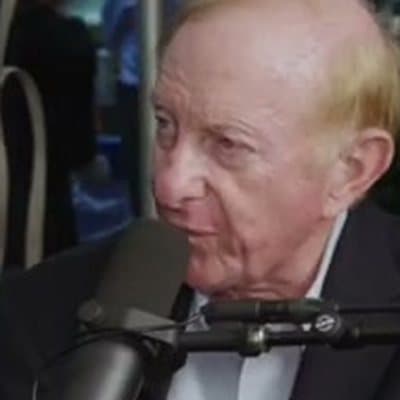
Chairman, B Capital
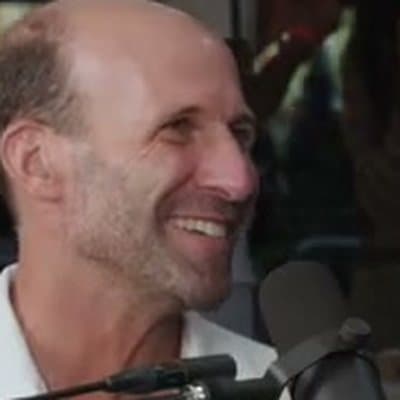
Everywhere Ventures
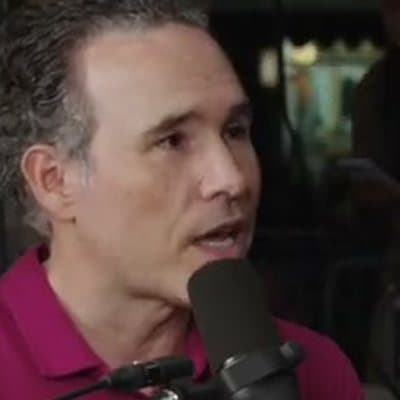
Readyly
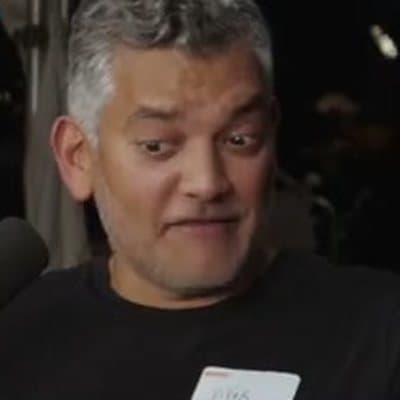
Movable Ink
Tiny Organics

VC, Flybridge
VC, Cherryrock Capital
Key takeaways
- Howard Morgan says exits build ecosystems, starting with DoubleClick. What New York still lacks is an easy way for graduates to meet the startups of their dreams, and he expects space tech to arrive next.
- Scott Hartley of Everywhere Ventures argues San Francisco keeps the gravity for base models, while New York wins at orchestration, cost optimization and applying AI to industries, where value is captured the way Uber captured it.
- Kris Sandor says Readyly’s AI agents answer phones, permits and service requests for cities and counties. Government is a zero-failure environment, which pushes them to choose models carefully for each task.
- Vivek Sharma recalls testing Movable Ink at this same event 15 years ago and growing it to $175 million in revenue. Today almost 100% of its code is written by AI with humans overseeing it.
- Jesse Middleton explains why Flybridge keeps its funds small: having helped grow WeWork from 4 to 4,000 people, he doesn’t want a big firm, and smaller funds tend to return higher multiples.
- Richard Odior of Cherryrock Capital says distribution often decides winners now that technology defensibility barely exists, citing a company whose 10 hospital customers joined its cap table and sold it to other hospitals.
Transcript
Transcript generated automatically from the episode audio and lightly cleaned up (filler words removed, misheard names corrected where clear). Speaker labels were added afterward and may contain errors.
Rob May: All right. I'm Rob May. I'm the co-founder and CEO of Neurometric.
Lauren Slyman: I'm Lauren Slyman. I'm a user researcher at Microsoft and an author of the book AI in Human Terms.
Rob May: So, we're shooting tonight from Madison Square Park where there's a big tech event. So apologies if it gets a little loud at some point. Some of the hosts were going to be switching places jumping in and out as guests come in. So, but we should talk to a lot of interesting people. So, we hope you enjoy tonight's show. And then in terms of news of the week, what's the what do you what do you think is the best story this week to talk about?
Lauren Slyman: Oh god, there are so many. There there's a Navier Stokes drama that's going on currently. There's the Anthropic I guess could you call it a whistleblower or just
Rob May: Yeah. A guy posting on social media?
Lauren Slyman: Yeah. A lot of people think that was a scam and a setup and like a marketing ploy.
Rob May: Yeah. All right. Let's do let's do let's do the Navier Stokes thing. And Madi can link to that. A lot of people have heard about it. But so, OpenAI's models solved a big complicated math problem, proved something. And there's a lot of debate because number one, it's like they kind of stole an approach from a human and then had a bunch of agents go run it to ground. And so there's a lot of debate about whether it's really that impressive or it's actually not that impressive. Where do you fall?
Lauren Slyman: Sure. I think it is a cheap approach to or using an expensive solution. They used I think it was about 10,000 agents and it costs over $10 million. Yet it lacked or it did not have the same level of integrity as what these mathematicians were working on for who knows how long at this point. So it was interesting. It was it was an interesting problem I think for the math community because it's kind of separating and that article you sent touched on it really well. It's separating the proof from the I forgot the exact wording but from the struggle essentially.
Rob May: Yeah. Yeah. Yeah. So Terence Tao the mathematician wrote an analysis of this and was like well part of if the machines prove everything his point was do we really understand it? Have we really learned anything and can we really you know at some point even if we instruct the machines on what to do to help push math forward and their assistance if we don't understand the work that they've done we lose the capabilities to continue to help them push math forward. Right? So part of this is about it's sort of like you know having bicep implants instead of lifting weights like they're not really like you don't really have big muscles. You don't really have the coordination to do that. This is a mental version of that.
Lauren Slyman: Yeah. And it doesn't Okay. It actually doesn't make sense to me because if you think about talking things out, talking concepts out, it helps you remember them better and it helps you think them through better so you can understand them better. So it's like if you're talking out your concepts or struggling alongside some sort of AI, why does that take away? It's like you have to do it in a certain way for the struggle to actually remain in. It's almost like you're teaching the AI.
Rob May: Yeah. Yeah. It's going to be interesting to see if this leads to changes long term because this ties into a bunch of themes we've talked about on the show before. The idea that these models are mostly replacing and these agents are replacing junior people. If there's no junior people in a field, how do you develop senior people? And so, you know, how are we going to work when people don't write code, they don't write pros, they don't solve math problems? Like you know, there's a reason that even though there's calculators, we still teach elementary school kids addition and subtraction and all those kinds of things. And it's going to be interesting to see if if we should keep some piece of that in society even as AI does this for us just to keep us human and keep us sharp.
Lauren Slyman: Yeah, I feel like we have to reeval re-evaluate the pieces that we do need to think through. Like I'm thinking about at work like I will I don't even write formulas anymore if I'm using Excel. I don't really use menus. I'm just having co-pilot help me I don't know apply a delimiter to something and then I just review the information. So it's like which part of that should I struggle through?
Rob May: Do you feel like AI is making you dumber?
Lauren Slyman: Sometimes I kind of think it might be getting there, but then but then I will practice just writing emails by myself and not depending on it too much. And I've been doing that the past few weeks cuz I did notice myself depending on it too much and my cognitive I think my cognitive functioning has changed actually within these three weeks alone. What about you?
Rob May: I could so I used it for a while to write my investing in AI newsletter and I ended up moving away from it because I might use it for to outline something or I might use it to check something or if I'm struggling with the paragraph like generate some wording. But part of it is it it uses certain words all the time like Claude likes to say things like the honest truth is blah. And like there's these like catchphrases that Claude has and you can you like I see them in all the stuff I read now I'm like Claude wrote that. So I don't like it.
Lauren Slyman: Yeah. It's frustrating. It's almost like as the reader it's like could you really not take the time to write it and you're just giving me AI produced work?
Rob May: Yeah. Yeah. I know. It's like it's like a it's like one of these services that'll like get all the dates of your with your significant other and birthdays and your friends and family and like automatically send them stuff and then like does that really matter because like you didn't do it.
Lauren Slyman: That's a good comparison.
Rob May: So yeah. Well, we got a good show for you tonight. We're going to have some good guests on. So stay tuned. All right, you want to introduce our next guest?
Stephen Messer: Well, I think we're lucky here to have Howard with us. Howard might be one of the nicest human beings in the world who has had the unbelievable luck of picking an amazing wife, building an amazing family, and that's before we get to his amazing successes. We're sitting here in New York in the center of technology, and I would say there's not a single company that doesn't have Howard's fingerprints on it for the good. He is friends with almost every founder he's invested in, which I can say about almost no other investor. And I can tell you that every investor you put money into, every founder you put money into will talk about the things they've learned about you before they talk about their own company. So, I am blessed to have you here today and I'm blessed to call you a friend.
Howard Morgan: Well, thank you, Stephen. I'm glad to call you a friend as well. And Rob here who we backed in back up many many years ago when I was at first round capital which I started with Josh Kopelman who I had invested in several companies with prior to first round capital Infonautics which we took public and then half.com so lot lots of interesting stuff going on
Rob May: how how do you how do you feel about the New York tech scene today like you've been in this a long long time and it's been up and down and like when I started when you guys backed me in backup I chose Boston over New York because the Boston tech scene was bigger and that is not true now
Howard Morgan: not true except in healthare In biotech it is, but in real tech, New York is by far bigger now. In AI, it's right number two really. Because we have Facebook's AI research. Meta, whatever it's now called, but it's fair is what they call it. It started as Facebook AI research. Amazon has a bunch of AI people here. Microsoft has a bunch of AI people. The Googleplex over at Chelsea. So, we have a huge a huge AI scene in New York. And with Cornell Tech, it's generating a lot of new companies and a lot of startups. It's a great place for tech for AI tech.
Lauren Slyman: Cool. What do you think the biggest influence on that has been? You mentioned Cornell Tech and have you seen other trends that have led it to New York?
Howard Morgan: Well, I think you know what what leads to a great ecosystem is exits and you know DoubleClick was the first big exit that got New York going. And then we had EarthWeb that the one that Jack Hidary had and then we've had lots since then and then you get people who know that a startups can actually lead to something good and they do more of them. So we're seeing that now with AI a lot of people moving around but we're starting to see people get acquired and you get acquired you work there for a year and then you start your own thing and that's kind of happening now here in New York.
Rob May: Yeah. So last question before we let you go. What do what do you think New York needs more of? Well, like if you if there's one thing you could help change about the ecosystem to make it better, what would you what would you say?
Howard Morgan: I think we have the co-working. We have we have the talent. We know that my grandsons who went to Harvard, they didn't want to stay in Boston. They didn't want to go to Bay Area. They wanted to come to New York. All the kids getting out of college, they want to live in New York for a while. So that's going for us. What we what we don't have is an easy way for them to meet the startups of their of their dreams. So I mean there are some organized events. We're we're trying at Cornell Tech where I'm on the run the council. We've got a big startup studio. We and we get a lot of people in to help there. I think you know we still have tech stars and a few other things. But that's what we need more meetups like this one. I mean this one has been going now for 20 some odd years. We started it when Charlie was at first round. And it's great. But that's what we need. And then the other thing I think is space. We're now doing a lot of investing in space technology and that's something New York's not really into yet. It will be.
Rob May: Yeah. Awesome. Well, Howard, thanks for coming on, sharing your wisdom and enjoy the rest of the event.
Howard Morgan: Thank you. Thank you. Thank you for doing that. Nice meeting you.
Rob May: So our next guest here at the Madison Square Park Tech event is Scott Hartley from Everywhere VC. If you don't know Everywhere, they are probably one of the most well-connected super early stage funds in New York City. Also happen to be an investor in Neurometric.
Scott Hartley: Yep.
Rob May: Scott, welcome to the podcast.
Scott Hartley: Thank you so much for having me.
Rob May: Tell us
Scott Hartley: finished my Shake Shack and I was I'm ready to
Rob May: Yeah. [laughter] Tell us your so first of all, how long have you been with Everywhere? I don't remember.
Scott Hartley: So we started the firm Jenny and I back in 2018. So about 8 years in we've got about 300 portfolio companies and as you mentioned it's kind of four founders by founders. So most of our LPs are founders themselves. Started as a New York experiment you know 50 founders supporting the next generation. During co obviously that blossomed out in the rest of the world and we changed the name to everywhere ventures and yeah so we're about 8 years in
Rob May: and how do you feel in that 8 years how do you feel the New York tech system ecosystem has changed is it better is it worse what's different
Scott Hartley: it's a great question I mean I think New York tech ecosystem obviously has evolved into probably being the number you know number one number two number three top ecosystem in the US for sure but probably globally as well and I think in the early days. I was really bullish on New York tech. I went to a fund on Sand Hill and I kind of became the New York guy when they didn't really give it any airtime. They didn't really believe in New York tech. And I came from living here for many years, moved back to the Bay Area and everyone said, "No, there's not really anything happening there. It's ad tech, that's it."
And I think it's really blossomed out into being as businesses have gone more vertical specific. So around vertical AI, all the biggest industries in the world exist in New York City. So if you want to build a full stack fintech company, it's New York, right? It's if you want to build a media company, if you want to build so all the verticals live here and I think as technology became an enablement layer that was supercharging existing industries, New York became the hot bed, right? And tech for tech's sake was maybe in San Francisco, maybe today there's some, you know, large language model companies or LLMs that are being built in San Francisco, but the application of those technologies to real industries is New York, right? And so I think that that was really our thesis, my thesis a long time ago and it's really blossomed out.
And it's amazing to be an event like this that Charlie's been putting on for years. And Charlie is kind of the OG New York VC. You know, originally the guy hyping Brooklyn before Brooklyn was cool. And so it's amazing to see the kind of prominence of New York tech when it used to be, you know, a couple small flat iron offices and General Assembly. That's actually kind of where we got started was in the general assembly floor that was right off of Union Square. You know, almost a decade ago. So,
Rob May: wow.
Lauren Slyman: And as you see it being implemented into more vertical companies, do you see changes or shift shifts happening within SF in the Bay Area as compared to before?
Scott Hartley: I think, you know, part of the reason that we love Neurometric as a company and what Rob's building is really thinking about layer 2, layer three and also as a preede fund that has minimal capital and sort of is valuation sensitive to kind of get in early. What we really do is think about, you know, where the LLM's going and then what are like the layer 2, layer three, second order effects around that. And so I think San Francisco has proven to be a great place for kind of layer 1 models. But I think as you start to get into orchestration, optimization of cost, optimization of applications to specific industries, that's where like New York can really shine.
And not to say that Paris can't build mistral and something can't be built in New York, but I think the gravity of core infrastructure layer AI at the LLM base models is probably San Francisco. But I'm very bullish on New York as far as all the applications. And I think more of the value will be built not in the app store itself like in 2007 with Apple but it's in the Ubers. It's in figuring out the applications of okay hey we have a phone with an app with a map with a camera we can geoloate cars you know and Uber was able to capture the marketplace value not not the sort of core infrastructure value.
So I think that many of those and I think it's still TBD where those you know what what those use cases will be in AI and I think right now from the investor standpoint there's kind of a flurry of activity and people trying to figure out what's really going to be big. You know there's proof that maybe it's Anthropic and OpenAI but beyond that there's really a very debatable ecosystem right that's still very nent and you're kind of at the forefront at neurometric and thinking about that layer too of AI.
Rob May: Yeah, there's actually a lot of people don't know this. There's a company here called Reflection that is going to launch a new foundation model. Actually I think it's supposed to come out in October, so hopefully we'll get him on the podcast then. But
Scott Hartley: Amazing. Yeah. Yeah. You should be on the next podcast guest.
Rob May: Yeah. Yeah. Well, and so last question and we'll let you go. What do you What do you think New York needs more of?
Scott Hartley: You know, I used to say like maybe there was the reason we started Everywhere Ventures is we felt like there was a gap of capital, smart capital at the earliest stage. I think you know over time that's being filled has maybe been filled but there's sometimes San Francisco has layer upon layer upon layer of repeat founders smart founders giving back investing in the next generation you know the early angels of any YC company are probably product managers and people that have lived and breathed at Google for a decade or two decades I think in the early days of New York tech it was missing that and the angel investors were the Wall Street guys the Mackenzie consultants the lawyers in Midtown and the reason we started everywhere was to try to catalyze the smart existing founders. We knew like one person here, one person there, and to say, "Hey, you know, Tom Lee at One Medical, you know, all the great healthcare deals, but you're maybe not seeing all the fintech deals and somebody else is coming from the fintech lands."
So, bringing all those people together to try to give back and also get access to maybe verticals they didn't have exposure to. So, I think that, you know, it's definitely gotten to be a deeper capital market. But there's probably gaps in there that it needs to needs to fill. But yeah, I'm just I'm very impressed and very kind of honored to have participated in the rides of New York Tech a little bit, you know, probably to a less degree than than Charlie has here at Brooklyn Bridge Ventures, but thanks so much for for having me on here.
Rob May: Yeah, thanks for being on the podcast.
Scott Hartley: Yeah.
Rob May: All right. Our next guest is from a company called Really. Kris Sandor, welcome to the podcast.
Kris Sandor: Thanks for having me.
Rob May: So, you guys have I would say of all the people we've had on the podcast, you have a use case we have not heard on yet. So explain to people what the company does.
Kris Sandor: Yeah, so Readyly builds agentic networks for local governments. We're working primarily with cities and counties across the country. We build a network of AI agents. We train them on all of the city or counties official information, talk to the staff about all the workflows that they're working on internally, as well as all the workflows the sta the residents interact with them on. And then we deploy those AI agents on every channel. So, we're answering phone calls for governments across the country, after hours, during the day, helping people get transferred around, submit service requests, fill out permit applications, we're also live on their website with different types of tools, chat, search, we can even respond to emails as well. So, we have a whole CRM ticketing system that we've built out as well for local governments.
Lauren Slyman: What is your take on the recent uptake in governance from AI companies across the board and regulations being secure on those?
Kris Sandor: Yeah. So as the models get more, this is a hot topic. As the models get more powerful, I think we have less transparency into how they're making decisions and there's a greater concern that they're kind of driving themselves. And I think that builds a stronger case for companies like us that are building very specific infrastructure to solve very specific problems in a way that is safe and accurate and reliable, especially in a situation like government where you it's kind of a zero fail failure environment. If somebody's asking if they need to evacuate, we can't be getting that wrong. And so that's a stronger case for company like companies like ours that are being very selective about what models to use, which combination of models in what sort of circumstance in a surgical application.
Rob May: Cool. And how do you guys choose where to run these models? Does the customer choose or do they not care? Do you do you have to run them in certain environments that are government approved, you know, and all that kind of stuff?
Kris Sandor: Yeah. Yeah. So I would say at a minimum universally the expectation is that everything is being stored and processed in the United States and then for certain clients there is more robust infrastructure essentially government cloud infrastructure with OpenAI, Google, Amazon as well.
Rob May: Awesome. And what do you like about building AI in New York instead of say are are you a New York area lifer or New York adjacent New York junior?
Kris Sandor: Yeah. Yeah.
Rob May: Have you always been?
Kris Sandor: Yeah, I mean I lived here in the city for quite some time. Grew up in Jersey and our company right now is based in southwest Connecticut.
Rob May: Yeah, we always tell people this is the this is the epicenter of applied AI actually I think more than than Silicon Valley.
Kris Sandor: So yeah, there are amazing use cases being built right here in the city and the surrounding area and increasingly you know AI is a it's a universal technology. You can build great companies. You don't need to be sitting in, you know, Silicon Valley. You can find great talent all around the country and tie them in with all a lot of the systems that we have available today.
Rob May: Cool. Well, Kris, thanks for coming on the podcast.
Kris Sandor: Thanks for having me.
Rob May: All right, our next guest here at the Madison Square Park Shake Shack Tech Party is Vivek Sharma, a New York legend, early entrepreneur. This is what Stephen says, so we'll we'll see and hear your story. VC, welcome to the podcast.
Vivek Sharma: Hey, good to be here.
Rob May: Yeah. So, talk a little bit about the so well, first of all, tell us so your your previous company and then what you're working on now.
Vivek Sharma: So, my previous company, I was founder and CEO of a company called Movable Ink. And this is a famous event for us because over a weekend, we duct taped a solution that would change emails the moment you open it, change images. And we tested it here at the Shake Shack event.
Lauren Slyman: Oh, wow.
Vivek Sharma: Charlie's like Shack event like 15 years ago. And I had a I had a co-founder. He was passing this around. He didn't get some great feedback. I got people really excited about it and we realized maybe one of us shouldn't be at the company.
Lauren Slyman: Oh wow.
Vivek Sharma: And so we kept going. We built a business up to 175 million in revenue, 500 plus enterprises. Sold the company last year and there's a new wonderful CEO, our former president, Adam Stambble, running it now.
Rob May: Nice. So what are you doing now? Are you still at the company? Are you hanging out or?
Vivek Sharma: I took time off in the summer. I, you know, saw the kids, learn how to be a human again and, you know, do normal stuff, normal And, now they're back in school and I got a little antsy. So AI is like thing I'm like very interested in and specifically safety, alignment, all the stuff you're reading about now. So the stuff I read about 25 20 25 years ago, it's happening now. And so how do we deal with it? How do we make sure it's, beneficial for the most people?
Rob May: Do you think do you guys think the labs I this week as we're recording this everybody's talking about OpenAI and Anthropic like we should slow down and there's two schools of thought one is like oh my god they've seen some terrible and they want slow and other people are like okay they've got to IPO they're starting to lose business to open source models their growth is slowing they need a story so they're going to be like hey guys we want to do this like where do you guys fall on that which do you believe
Stephen Messer: I mean you're the guest so
Vivek Sharma: I think we should separate facts from motivations like what's actually happened and Then, you know, I know the fingers being pointed, regulatory capture and all this. I don't care about any of that. Let's just get the cards on the table. What really happened? And I frankly think Congress should hear about this and like get everyone's point of view, put it in the public record. What are the worries? What are the concerns? You know, AI doing really bad stuff. US should should try to win over China. Open source in the long run is probably the better like thing where the power gets decentralized. How do we get all these things but just all the information? There's too much name calling and skepticism and that' be much healthier to have a debate with all the facts. What do you think?
Stephen Messer: I think this is the week that will mark over in history the beginning of irrelevancy for the language models. Who cares about language models? [laughter] Honestly, they're useless. They're they're commodities. I thank the Chinese for getting people there faster. Then we get to the real stuff. I think language models are a joke.
Rob May: Yeah. 100%.
Stephen Messer: I don't use them every day. It's not the one of the most used. I think they are the most commodity thing on
Vivek Sharma: Do you use it every day? Do you use and get there every day too and I still pollute it?
Stephen Messer: It doesn't matter. [laughter]
Vivek Sharma: Yeah. You don't care.
Stephen Messer: Typac's Jev model that came out this week I think is starting to mark the fragmentation in the like non like the decline of LLMs right you could you could look back I mean people are going to use them but it's going to be like CNN's are now people still use convolutional neural net use Linux every day it's irrelevant it's just not like oh my god this is yeah who cares I think as you spend more time in AI you will very quickly realize nobody in AI cares about them only the media what we care about is the money that will be made from them that will trickle through the rest of the economy when the real stuff comes.
Vivek Sharma: So having having used it run a company there's you know a 100 almost 100% of our code at moveink today is being written by AI there's humans overseeing it like just the productivity the scale the kinds of things that you can do commodity commodity well but it's a in the internet you know incredibly useful
Rob May: I think Stephen's not saying they're not useful I think Stephen's saying they're not like everybody treats it like oh my god this is like AGI it's the greatest thing these companies are the whole rely on these these frontier players.
Stephen Messer: Nobody cares. I don't care about them at all today.
Vivek Sharma: Yeah. Today, but there's a ton of value.
Stephen Messer: I saw models weekly and it means nothing to me.
Vivek Sharma: But you use it in your company.
Stephen Messer: I use tons of models. Nothing. I didn't say there's no value. I said they're irrelevant. They're like Linux. I can swap an operating system and still not care because I've abstracted the model away from all the things that matter.
Rob May: So, it depends. So there's two ways this could play out, right? I think the frontier labs have to be improving at an exponential pace. Otherwise, you're better off with the gaps have been for the for the last year and a half, the gaps have been what 2%. So here's the thesis. If they don't if they fail at that, open source is a clear winner. Then you've commoditized the entire one.
Stephen Messer: Look at the number of people switching in just the last three weeks. The it's insane. And that's before the AI dumping that's going to come clearly because China wants a chip industry.
Rob May: I if if the curve doesn't bend to recursive self-improvement and all these other things that are going to happen, open source will win. I think the bet on the Frontier Labs is and they have to. That's the only way this all pays off. The capex and everything else that goes into it is RSI.
Stephen Messer: I will take the bet any day. I think the greatest short will be probably 5 months and 20 days. The greatest short will be Anthropic.
Rob May: Interesting.
Stephen Messer: And I wonder because of that if OpenAI makes it out and I worry about that.
Rob May: Should we should we make a side bet on this?
Stephen Messer: I'll make a bet any day. [laughter] This one I'll take whatever you want to give me. That's an easy bet.
Rob May: So I run a company that makes task specific small language models. So like I'm very much of the believer that whatever the Frontier Labs do, you just don't need them for that much stuff.
Vivek Sharma: Yeah. Yeah. You don't need a PhD working on every single problem, right? You don't need an intell most problems you're perfectly fine with an intelligent if it's near cheap you know unmetered you can manage it your own way you can set your own rules about how it works you've got a you know proper governance so the benefits the value has to be way more compelling for why you need a ultra PhD to work on a set of problems
Rob May: so how have you seen so you've been a longtime fixture in the New York tech ecosystem what has changed and why has it changed what what's led to the fact that we have more tech jobs in San Francisco now that we are sort of the capital of applied AI like what do you think are the forces that have been driving the rise of New York
Stephen Messer: can I just clarify Rob nothing changed we reverted back to what's normal there was we Silicon Valley only became big after World War II this always was the Silicon capital Silicon Valley became big on chips because you're not going to build a fab in New York City the same way you're not going to build a port for containers in New York City I think tech now Now that we've moved on, it's coming back to where it rightfully belongs.
Vivek Sharma: I think the advantage I used to live in Silicon Valley, work there. I still think the state-of-the-art thinking is happening there. But one of the advantages of New York I found is you got a lot of people who think in different ways and work in different industries. You run into normal people who aren't obsessed with tech every single day. And so it kind of balances you and keeps you real. And especially with you know the things happening with AI you can be an expert in an area without having to be a co an expert in writing code and accomplish really interesting things so I'm all for that you know there's 2 million software developers in the US but 150 million business workers and so if everyone's solving their own problems producing things there's a creative explosion a renaissance that we're going to see and New York's the place for it
Stephen Messer: yeah I'd still rather live here [laughter]
Vivek Sharma: Steve and I met in Silicon Valley at a dinner we were both out there for work and started started talking about how much more we like the east coast. That's how that's how that was our first interaction and we were also only people without autism.
Stephen Messer: So wellbe I love seeing you. It's great to see you man.
Vivek Sharma: [laughter] I know Stephen's an OG. Met so many people. Still the best.
Rob May: Yes. Yes. We're still going to have this bet, right?
Stephen Messer: Please. I'll take whatever you want to give me.
Rob May: All right. $100 bet.
Stephen Messer: This might be the easiest bet I've ever made.
Rob May: All right. All right. We'll see. We'll see. Thank you guys. All right. So, our next guest is Sofia Laurell from Tiny Organics. Sofia, welcome to the podcast.
Sofia Laurell: Thank you so much. Thanks for having me. So excited.
Rob May: Tell us a little bit about what your company does cuz it's not an AI company, but it's here in New York. So, know what your company does and then we're curious, how does a nonAI company use AI on a regular basis?
Sofia Laurell: Great question. My company is called Tiny Organics. It's a baby and toddler food company. The big mission for us really is to shape the pallets of generations of children to learn to love vegetables from the very beginning. It might sound niche, but it's not. How we learn to eat when we're babies and toddlers impacts our whole life. In terms of how we use AI, I was talking to someone tonight that we don't yet have agents for the company, but I think it has made us like someone I know very well says it's made me bionic. It's made us bionic. Like, I think it's made us much better. We're currently in the process of we're very close to being profitable. So, so strategizing that and just getting priorities in order. And it keep me it keeps me honest. I use it every morning like where are we on my to-do list. I have a lot of unread emails, a lot of tabs open. Just even things like that where you'd want a human go through them because you don't want to miss anything important. But yeah, I can't say we're I think we're probably in the middle of how like startups generally use it.
Stephen Messer: So, can we talk about project tubby? I understand you've got a secret project where you're using AI to look at photos of the baby to see if they've eaten too much. Can you [laughter] talk a little bit about Tubby?
Sofia Laurell: Hey, listen. That's not a bad idea, actually. Mainly just to showcase, [laughter] not the tubby part, but Project Tubby is a great name.
Lauren Slyman: Project Tubby is actually a great name. Cute.
Stephen Messer: Wait, would you prefer Chubby?
Sofia Laurell: Yes. Yeah. Instead of Tubby. It's a cute name, but we could use something like, hey, take a picture of what you fed your child. You know, what type of nutrients would you need more of? All of that.
Lauren Slyman: I think it's a great I know a lot on the diet apps you take photos and it tells you.
Sofia Laurell: Yes.
Stephen Messer: But I think you should take a photo of the child to see if the child's eating too much because, you know, you know, my 16-month-old does have a bit of a belly, but you know, oh my god, we feed him a lot of tiny organics.
Sofia Laurell: It's a good thing.
Stephen Messer: All right. Is it? I don't know. I mean, I'm not calling you a bad mother. I'm just saying [laughter] Project Chubby could work well is all I'm saying.
Sofia Laurell: That's it. So, I have a question for both of you. How would you use a like what do you think I'm missing out on on using AI for kind of you know we're a growth company now but our early CPG company what would you say?
Rob May: Yeah I mean you can use it for a lot of a lot of common tasks. It can help with like like hiring you know classifying screening resumes doing stuff like that. It can definitely help gather information from people and build you know dossier of customers you might talk to. Obviously a lot of reporting, custom reporting. There's a whole you being able to type in natural language and ask ask business questions, have it tie into your systems and all that. Is pretty pretty good.
Sofia Laurell: That makes sense.
Rob May: Yeah. But it's best if you can find an application like Stephen was talking about that ties to your core business and gives you feedback that helps you improve your actual product.
Sofia Laurell: So I was just about to say we have this survey that's been running for years that has like I don't know 4,000 responses, but it's like super cumbersome to go through them. So that's an example actually that we use those insights. But yeah, I think there's much more we can do with it.
Stephen Messer: Yeah. I mean I look I've already given you project tubby. [laughter] I feel like you're asking me you're asking me for a lot more. But I would tell you what would be great for you cuz lead genen is hardest for you. What would be great is if you allowed any new parent to be matched confidentially based on their data by the AI with someone who's a little bit ahead of them so they can learn of what they're about to learn. Oh. Because this way you don't have to worry about giving away anyone's data and you can actually also have the AI moderate it to make sure they're not giving misinformation.
Sofia Laurell: Wow, that's I heard it here first. That's a really good idea stages.
Stephen Messer: Tubby's better. [laughter] Project Tubby's number one because you could have friends share photos of other people's kids to judge if [laughter] they're fat.
Sofia Laurell: Oh god.
Stephen Messer: Which would be way better cuz then they could all send it to the family parent group and everyone could get in on the judging.
Sofia Laurell: Mom chats are kind of controversial.
Stephen Messer: Remember when they did the how old are you? How fat is this kid? And I think it'd be great like a body mass index where everyone guesses and the AI tells you what it is. I think it'd be great.
Lauren Slyman: AI powered body shaming. There we [laughter] go.
Sofia Laurell: Body shame young.
Stephen Messer: Body shame young. I mean, get them ready for the world is what I'm saying.
Sofia Laurell: I love it.
Rob May: So, Sofia, what do you like about building in New York?
Sofia Laurell: I love New York. I'm from Finland originally. I've lived in New York now 16 years. The thing I love about building in New York, you can, we all know this. You can, anyone you meet will be a different type of conversation. Unlike some other places where you feel like people are pretty similar or have similar opinions, the diversity of opinion, background, and opportunity here is like nowhere else. I think it's really cool. I also think that there's different types of founders here. So, it's not just like mega like pure AI all the time. So I love building here. I think there's also infrastructure and systems in place to build. We've been we founded the company at an early stage seed fund called human ventures. They're still very successful.
But their big mission was really to solve human challenges. And I think not only what's bigger what's a bigger human challenge than solving the way your child eats, but also New York I think is just the heartbeat of the US and the world. So
Stephen Messer: and New York loves you.
Sofia Laurell: I feel like the New York energy has made us the way we are
Stephen Messer: Miami like now that [laughter] I'm just going to pretend doesn't exist. But New York New York loves you.
Sofia Laurell: Oh well. I love I love it. I love you guys.
Rob May: Sofia, thanks for coming on the podcast.
Sofia Laurell: Thank you. Oh, thank you so much. Thank you.
Rob May: So it's raining here at the tech event, so everybody's under the tent.
Lauren Slyman: Yeah. Which is cool.
Rob May: But, our next guest, we're going to talk for a couple minutes to Jesse Middleton, who's a VC at Flybridge. Jesse, welcome to the podcast.
Jesse Middleton: Thanks for having me, man. I appreciate it.
Rob May: Yeah. So, so first of all, tell us, so tell us a little bit about, Flybridge in terms of Flybridge was started in Boston.
Jesse Middleton: Yeah. Started.
Rob May: So, so why why start a New York office and how things been going on the New York side?
Jesse Middleton: Yeah, I mean, look, my partner started Flybridge over 20 years ago. So, it was a different era, right? There were no seed rounds at that time. There were seed funds. As New York became a real thing, they wound up backing a couple pretty big companies here. One of those is MongoDB that wind up becoming a big success and anchoring them here. And so I joined them 10 years ago. We became partners and now most of our investment activity happens here. And we love the technical founders that choose to call New York home. I've been here 18 years so you know it's been a good time.
Rob May: Awesome. And what do you think has made Oh, sorry. Over the last 10 years, what do you think has made the rise of New York? Like I so I moved to Boston with my first company. I met Jeff in 2009 and Boston was significantly bigger than the New York tech scene and it's New York is a dominant number two now.
Jesse Middleton: I look I think part of it is and no knock to Boston, but I think it's really fun to live in New York. It's really fun to live in New York. So if you are young, brilliant, driven, single, like excitable, New York's an incredible place to be. It's hard to argue that. And so I think it's about where people want to live and great people attract other great people. And so you just wind up seeing this flywheel. It also doesn't hurt that there have been a lot of successes here. I saw Kevin Ryan walking around this event. You know, these guys like they there's massive successes been built in the city and people come back here and they want to be around that success.
Stephen Messer: Yeah. Yeah. So, Jesse, do you think it's an intelligence test for how long it takes from someone in Boston to realize they should move to New York? And if so, how many years should it be? How many years? I mean, should it even be a year? I talk days.
Jesse Middleton: My view is it should be under a year. Yeah. It should be under a year. I don't know if it's an intelligence test broadly, but I will say that if you want to hire great young talent that's ready to work and build, you go to wherever that talent is. So, there's two places in this country that you
Stephen Messer: What if you're the founder?
Jesse Middleton: Oh, if you're a founder, I think you got to come to a city like New York right away. You need the energy.
Stephen Messer: You chose to stay in, I don't know, Boston for how many years? I'm just curious. I'm just curious. How many
Rob May: I have small children in Boston, you
Stephen Messer: Jesse, you've done exactly right. It is an intelligence test and I would agree with you.
Jesse Middleton: We have some brilliant founders in Boston, too.
Stephen Messer: There's exceptional rules, but you were saying under a year, right?
Jesse Middleton: That's right.
Stephen Messer: Yeah. [laughter] Especially if you came and visited often and you had friends who were there telling you what the hell are you doing with your life?
Jesse Middleton: I'll tell you what, if it wasn't Boston, like I have a couple founders that are not in Boston nor New York. I think they're freaking nuts. Like I don't know. You're in DC and I got no issue with DC, but like you're going to be there. The talent you're surrounded by there, that's tech talent, engineering talent, that's like you got to be in this place. So yeah.
Stephen Messer: So do you think it like being in Boston is as bad as being in like Anchorage?
Jesse Middleton: No, like it's almost right.
Stephen Messer: You're not it's almost core sometimes. We don't have to be You don't have to be nice to
Jesse Middleton: No. Look, my business partners are in Boston. We back a lot of people coming out of Harvard, MIT, things like that. But I will tell you that a lot of those people when they graduate Harvard, they move down. And Boston's doing a good job in the last couple years of trying to convince people to stay, but you got to convince them to stay, [laughter] right? And that's the difference. I think this draws you in. Like there's no convincing somebody.
Stephen Messer: Well, it is an intelligence test. Again under 365 days we've agreed on a good message.
Jesse Middleton: I appreciate that. Thank you.
Stephen Messer: So can I ask you with AI it's reshaped VC to basically five to 10 major firms and everyone else is relatively out there when you think about your own [laughter] but let's be honest I mean they're very big checks now.
Jesse Middleton: Yeah. Yeah. Totally.
Stephen Messer: There's you're not buying inference for a million or four, right? So how do you think about the firm and where you need to go?
Jesse Middleton: Yeah, I mean look we there's always like riches in the niches they say right and so like I would say like you can chase the anthropics you can chase the open AIs you can also look at what's coming on the next horizon and so like we coming out RC you I mean you know this company but like small language models turned into openweight large language models built for the US market like that is an alternative to the big labs we got into that at a seed at the time they only used by the way to train that large language model under $20 million which in the scheme of like Frontier Labs It's not a lot of money. And so I do think it becomes harder and harder and more focused in order to back those.
Stephen Messer: Can I ask another question though? Why wouldn't you want to raise more money when you're judged and you earn on aum?
Jesse Middleton: So there's a couple reasons that number one is the shape of a team. I built my last part of my career. I built WeWork from the ground up. So we went from 4 to 4,000 people. I know I don't want to be in a 4,000 person company. I don't want to be in a 400 person company. And I frankly don't want to be in a 40 person company. So you grow aum, you got to do something with that.
But the other thing is that we don't hope to get rich on the management fees. So I think at the end of the day, the multiples I can return on a smaller fund tend to be higher. Now A16Z will probably prove me wrong, and that's fine. But what I can tell you is I have a 4-year-old smaller growth fund that is top 3 plus% of its vintage. And I'm real happy to have many multiples on that fund in four years and get paid on that than I am to have to chase a billion.
Stephen Messer: But isn't it the time to then parlay that into again it's a common path. If the world is changing you change with the world.
Jesse Middleton: Depends on if I can run that playbook again.
Stephen Messer: What's that?
Jesse Middleton: Depends on if I can run that playbook again.
Stephen Messer: You don't think you can you think you run the same playbook at a smaller number and get a bigger return?
Jesse Middleton: I think I think my playbook has to change if I go to a bigger number for sure. So but yeah.
Stephen Messer: All that's why I was asking this is New York. The best part about New York is everybody is in finance. So we don't we don't think VCs are the smartest people in the world. We call We call when they're making bad mistakes early.
Jesse Middleton: That's right.
Stephen Messer: I'm just [laughter] saying. By the way, who wants more money?
Jesse Middleton: Definitely not a finance guy. I dropped out of college, so no [laughter] one was going to hire me at a bank.
Rob May: Jesse, you're awesome. Thank you for being on. Thank you for being here. Next guest here, actually just switched firms, so we'll have him talking a little bit about that. But, venture capitalist in the New York area, Richard Odior. Welcome to the podcast.
Richard Odior: How you doing guys? Richard Odior here. Super excited to join you guys. Cherryrock Capital. We focus on series A and B companies that are redefining categories and so just excited to be here with the Robin team.
Rob May: So yeah. So talk a little bit about a lot of people watching. Everybody wants to be a venture capitalist. What was your path to venture capital and why did you choose New York instead of San Francisco?
Richard Odior: Oh man, there's like no one way to get into venture capital. It's like the craziest thing ever. You almost have to do the job for as long as possible until someone sees you doing the job. My career path is unorthodox. I started my career in oil and gas and commodity trading. Then me and my friends opened up a chain of gourmet doughut cafes. I decided to go to business school and I realized brick and mortar doesn't grow as fast as I wanted to and I wanted to learn more about tech enabled. I got to business school and I went there because it's the one place to get credit for figuring things out over two years. So the whole time I worked at an early stage fund cuz someone would give me a seat and I launched a travel startup. The travel startup failed but it was super exciting. The first time I got to build a tech enabled company and then I started thinking I wanted to see more people that look like me on the other side helping me thinking through investing and scaling businesses and so even then I still couldn't break in.
So I went into incubation. I was working on helping large scale corporations incubate new companies. I ended up going to Facebook and helped build some notable projects there and leading a lot of product strategy. And at that point I just started working with early stage companies thinking about product growth, how to build the platforms. Then I started advising a lot of different venture funds. And the more advice I gave to more funds, they introduced me to more funds. And then I became a scout at a couple different funds. And then eventually a firm was like, "Hey, you're really good at working at founders at the early stage. Would you want to come help launch our preceed fund? And I did. Was there for several years investing out of three funds and then I recently joined Cherryrock Capital where we're investing out of fund one $172 million fund. So yeah.
Lauren Slyman: What was it about early stage founders or funds that you were not only most attracted to but also understood better than most?
Richard Odior: I think most early stage companies are going to have to sell into enterprises and so they don't have the rigor to understand what it looks like to actually acquire a contract. And I'd worked at a lot of different large organizations and understood what the gap is that's missing. What's the gap that gets people to actually try something? What's the gap of finding who the person you need to actually engage to get a multi-year contract or product demo or offering? And if you can bridge that for founders early, it actually accelerates the way they build. Also most people don't know how to think one to many. Everyone wants to get one customer. And the reality is even in this current market, it's a one to many distribution advantage that you need. How can I find that one node to get to many people, many organizations? And so that was something that was really exciting for me giving that insight to people.
Rob May: So in the time you've been doing this, do you feel like the venture capital and startup community has gotten any better on its embracing of like women and minority founders and investors or is it still a big problem?
Richard Odior: I think it's definitely still a big problem. My hope is that like I do my job really well and it gets more people excited to do their job similar and hire people that are diverse, hire teammates that look like that don't look like them, think about different perspectives, hire build up their cap tables in dynamic ways, let different types of angels and build with unique people. It hasn't gotten better and my hope is that as we continue to do this work, it does get better. It's getting a little bit difficult because I think we're regressing and hiring in the AI market, if that makes sense. And so a lot of these AI tools also have inherent bias in themselves and so working to figure out ways that we can continue to diversify the pot in the pool. No.
Lauren Slyman: Do you see the increase in AI tools changing the cardal cardality that you mentioned of one to many?
Richard Odior: Man, I will tell you right now if you cannot find a distribution advantage, it becomes very very difficult. I would tell you there's a reason why some of the largest venture capital firms in the in the world have go to market teams that are larger than their investing teams. If you want I don't know what the number is at Andre but I'm pretty sure if you looked at the ratio of investors to go to market there's a there's a vast ratio and it's because distribution often times is a winning factor in this in a time where technology defensibility doesn't really exist so how do we accelerate distribution so often times even as I'm looking at different deals I'm like is there a distribution advantage I can get into there's a company I invested alongside 10 hospitals the 10 hospitals came on the cap table as customers and then they sold it to the other hospitals for them and often times that's what you need. How can I get one to many and so trying to think through what that looks like.
Rob May: Yeah. And so last question and we'll let you go. What do you like about living in and investing around and being based in New York City?
Richard Odior: One the thing about New York is the subway unifies everybody. I don't care if you're a billionaire, if you're poor, the subway unifies everybody. So in every given day, I just get to rub elbows with some with every and anybody of all kinds. And that allows keeps you humble and forces you to respect the culture of the city and of the founders. I love that if we have a community event, I can probably go to three of these in one night because we're so close and enthralled. Like I'll go to LA and I'll go to tech week and things are on the opposite side of town and you really can't meet and see people. Here the community is real. I can touch it. I can feel it. I know these people. I'll see you again. I'll see you again. And so that also matters because it matters the way that we treat each other in the community because you hold a level of respect because we're really tightknit and I love that about New York.
Rob May: Richard, thanks for coming on the podcast.
Richard Odior: Thank you guys for having me.
Rob May: So, thank you everybody for watching our show from Madison Park. We had a lot of great guests tonight. Follow us. We got a new website, aiinnyc.org. We've got swag now, so you can order t-shirts and hats from the website or come on the show and we'll give them to you. Please tell your friends, rate us, subscribe, and, if you know somebody who should be on the show you think would be a good guest, please reach out. Thanks for watching.